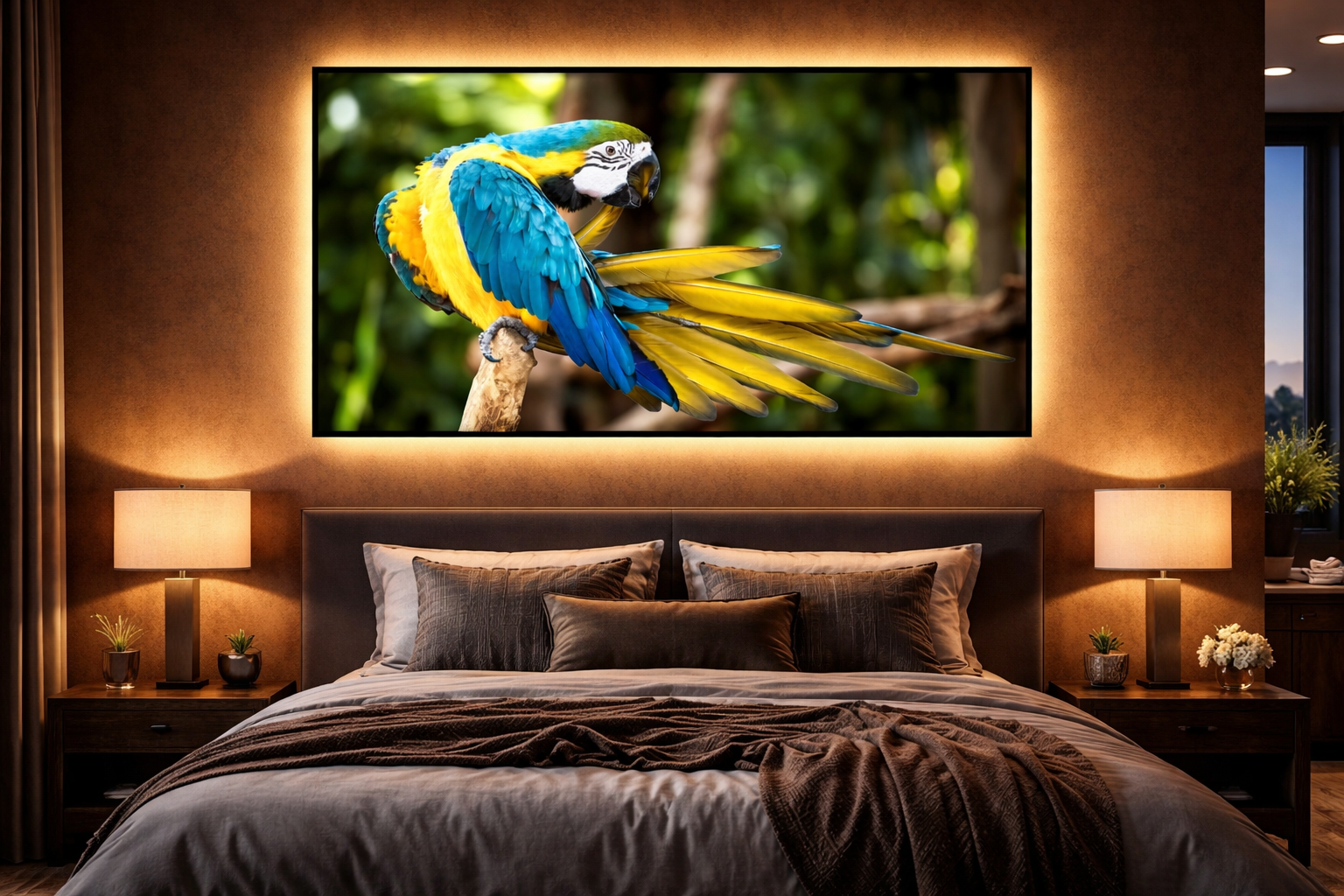
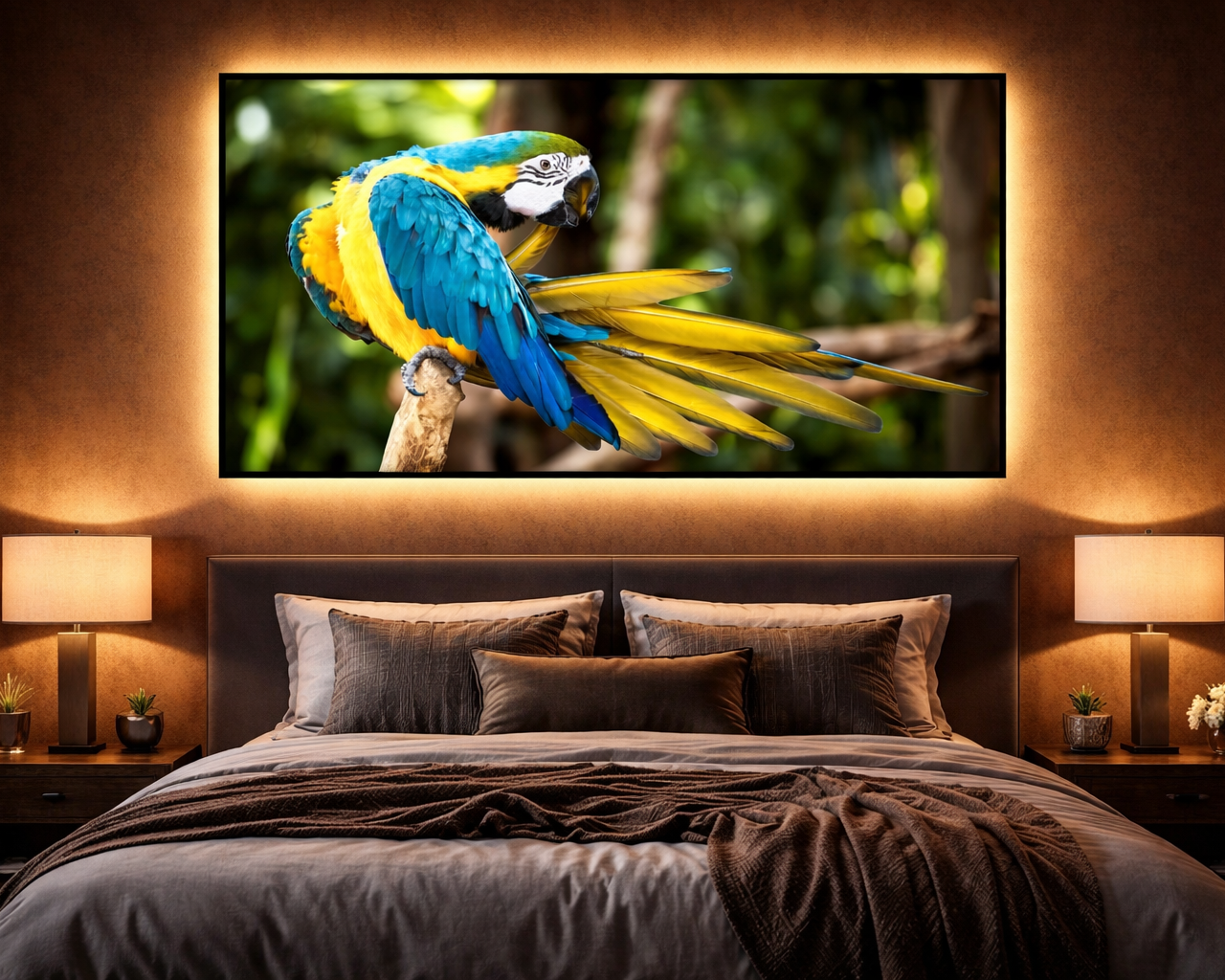

A bold expression of nature’s brilliance, this striking macaw portrait captures a moment of quiet elegance and vivid life. Perched gracefully, the bird’s radiant blue and golden feathers unfold in perfect harmony, set against a lush, softly blurred natural backdrop.
Every detail—from the intricate feather textures to the piercing gaze—is brought to life through a premium backlit presentation, creating a warm halo that enhances depth, color, and emotion.
Designed as a statement piece, this artwork transforms any space into a refined gallery, blending exotic beauty with modern luxury.
✨ A celebration of color, freedom, and timeless natural art.
Elevate your space with a piece that commands attention and radiates warmth. The glowing backlit macaw artwork adds a rich, ambient presence to your bedroom, creating a calming yet vibrant focal point above the bed.
The interplay of light and color brings life into the room—turning your wall into a living canvas.
16x24 backlit art that glows with life.
SinghCamera Fine Art Collection
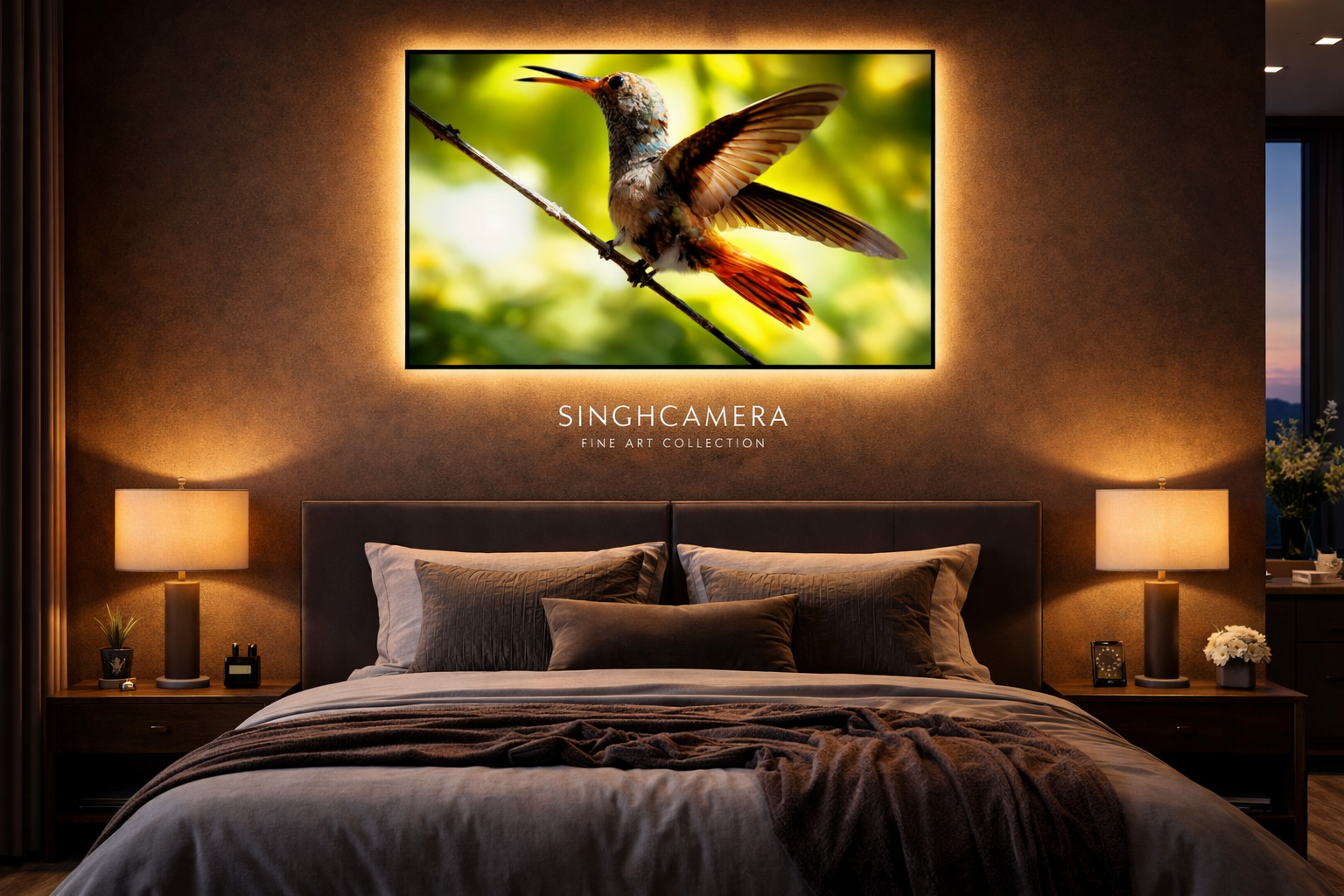

“Golden Stillness” – Fine Art Backlit Edition
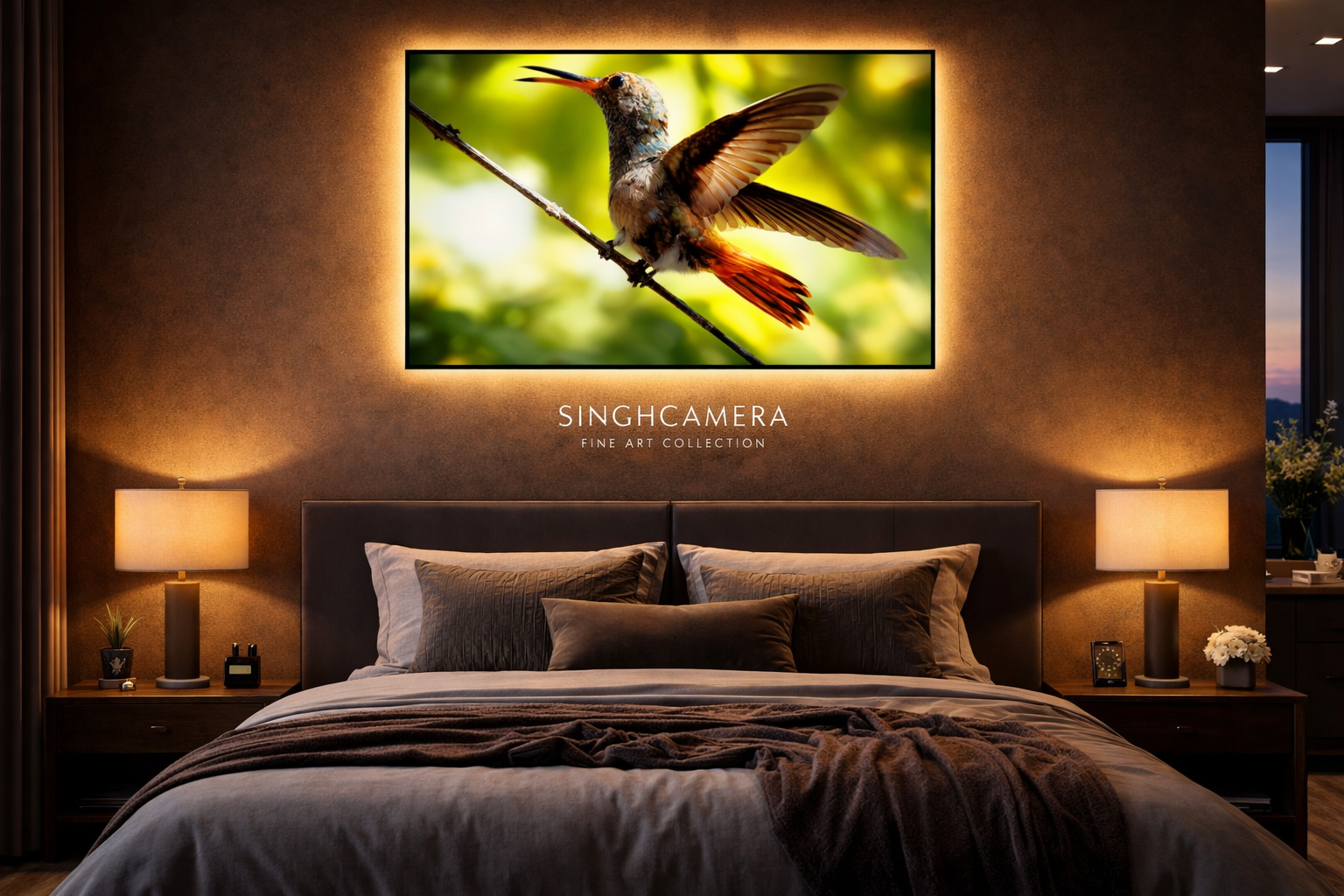
A breathtaking moment captured in nature, this striking hummingbird photograph radiates life, motion, and quiet elegance. Suspended mid-pause on a delicate branch, the bird’s iridescent feathers glow against a soft, luminous background—creating a sense of depth, warmth, and serenity.
Presented as a premium backlit wall installation, the artwork is elevated with a subtle golden halo that enhances every detail, transforming the piece into a living visual experience. The gentle illumination adds dimension and emotion, making it a perfect centerpiece for modern luxury interiors.
Designed for those who appreciate fine art, nature, and sophistication, this piece brings calm energy and timeless beauty into your space.
✨ Where light meets life, and stillness tells a story.
A statement of calm and elegance, this backlit hummingbird artwork transforms the bedroom into a serene retreat. The warm ambient glow creates a soft halo effect on the wall, blending seamlessly with modern décor while adding a luxurious, gallery-inspired touch.
Perfectly placed above the bed, it becomes more than art—it becomes an experience.
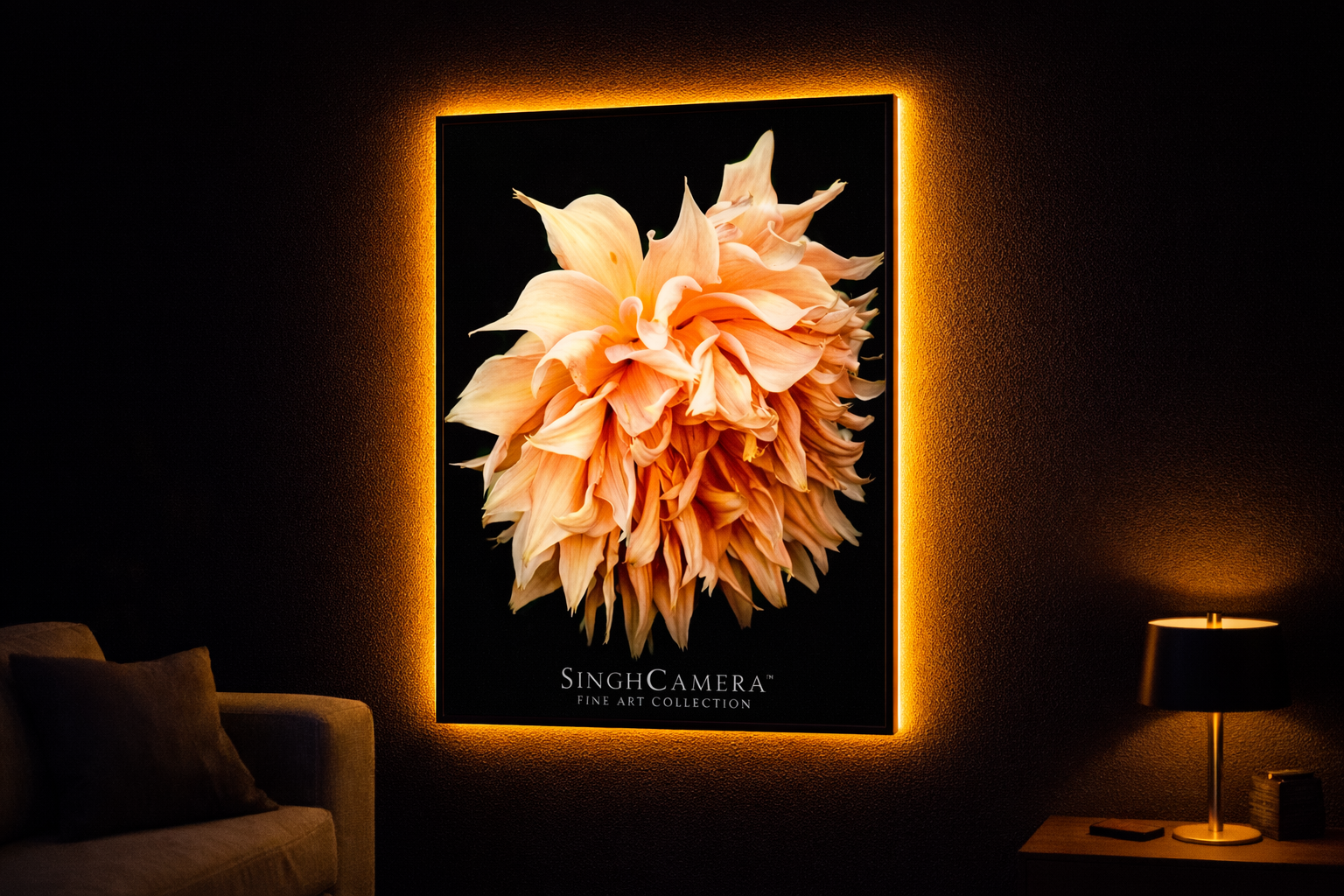

Elicate yet powerful, this exquisite bloom unfolds like a quiet masterpiece—layers of soft ivory melting into warm peach and glowing amber tones. Each petal carries a sense of movement, as if the flower is gently dancing in stillness.
Set against a deep, dramatic background, the colors come alive—radiating warmth, elegance, and natural perfection. This piece captures the intimate beauty of nature up close, revealing textures and details often missed by the eye.
It’s not just a flower.
It’s softness, strength, and timeless grace—frozen in a single moment.
Perfect for luxury interiors, bedrooms, or serene spaces, this artwork brings calm energy and refined beauty into your environment.
A statement of elegance. A moment of nature—forever preserved.
✔ Elegant and calming aesthetic
✔ Perfect mid-size statement piece
✔ Enhances modern & luxury interiors
✔ Timeless floral beauty
Best for:
Bedroom décor
Spa / wellness spaces
Luxury homes
Gift collections
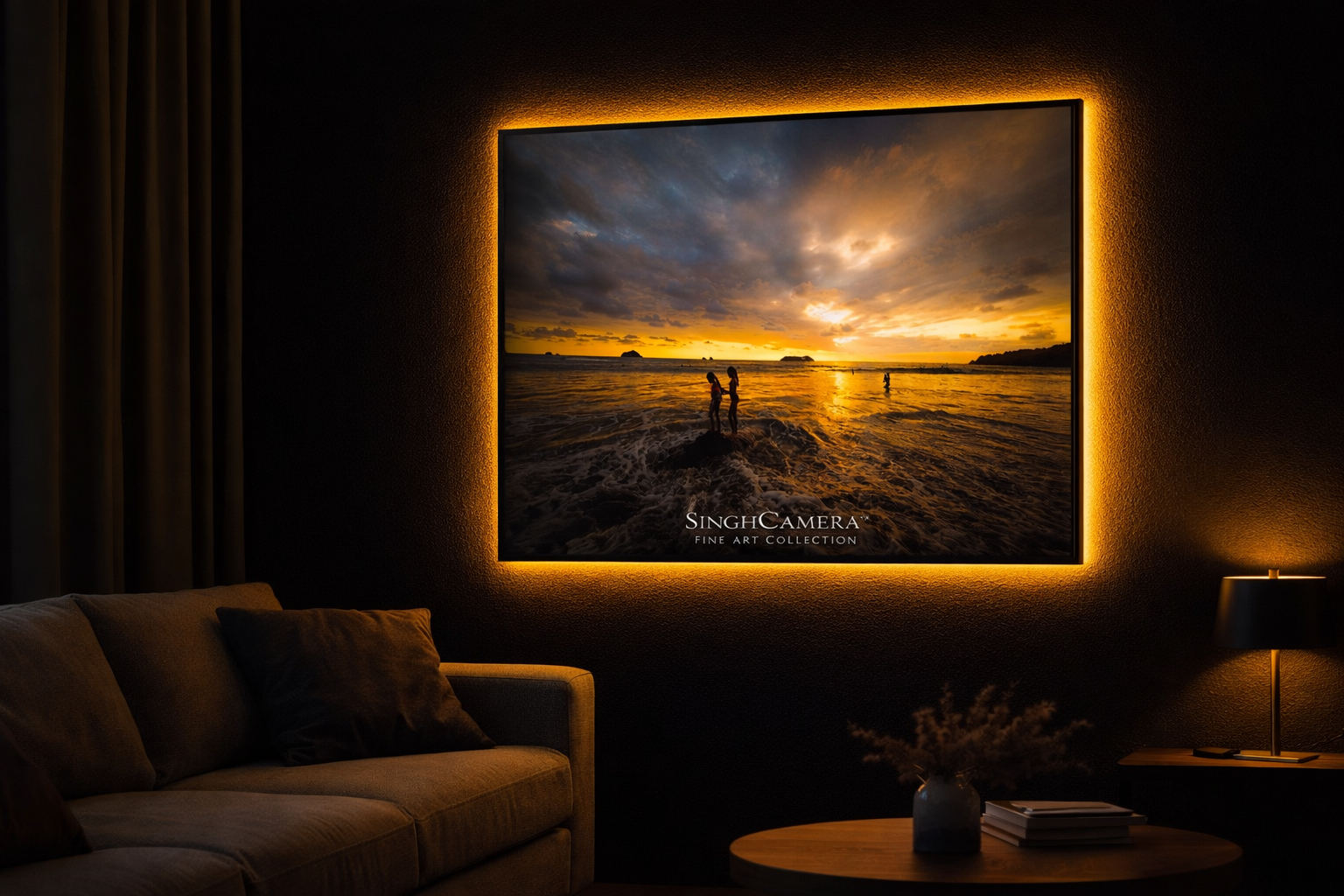
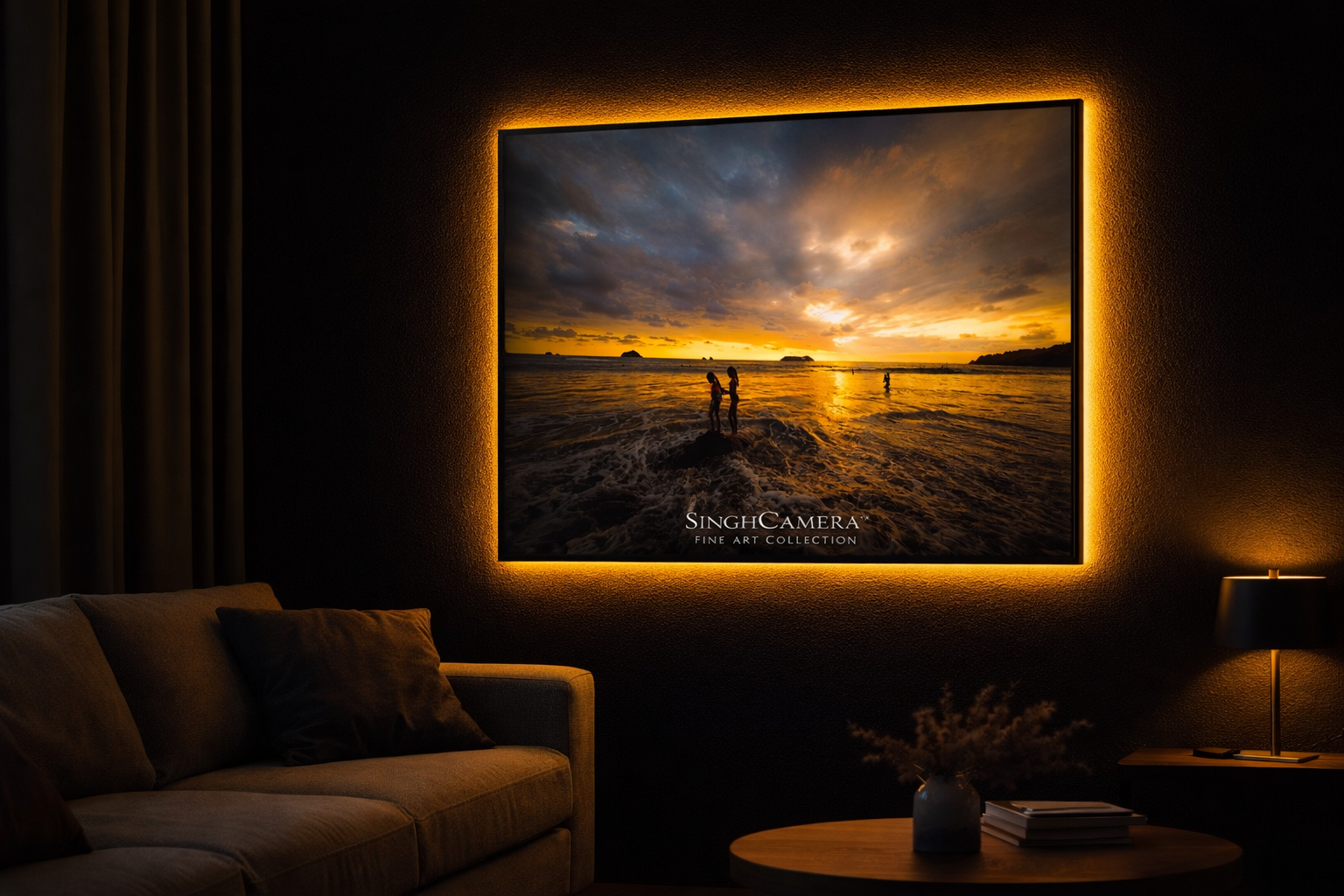

A breathtaking capture of the ocean at sunset, where golden light meets deep shadows and the rhythm of waves creates a timeless story.
This fine art photograph evokes calm, connection, and luxury—perfect for transforming any space into a peaceful retreat.
Location: Coastal Sunset Scene (Costa Rica)
Style: Nature / Fine Art / Luxury
Orientation: Landscape
Color Tone: Warm Gold + Deep Contrast
Archival Fine Art Paper
Canvas Wrap (Optional)
Acrylic Glass Finish (Premium)
Framed Options Available
If you’re not 100% satisfied, we offer a full refund or replacement.
16” x 24” — $299
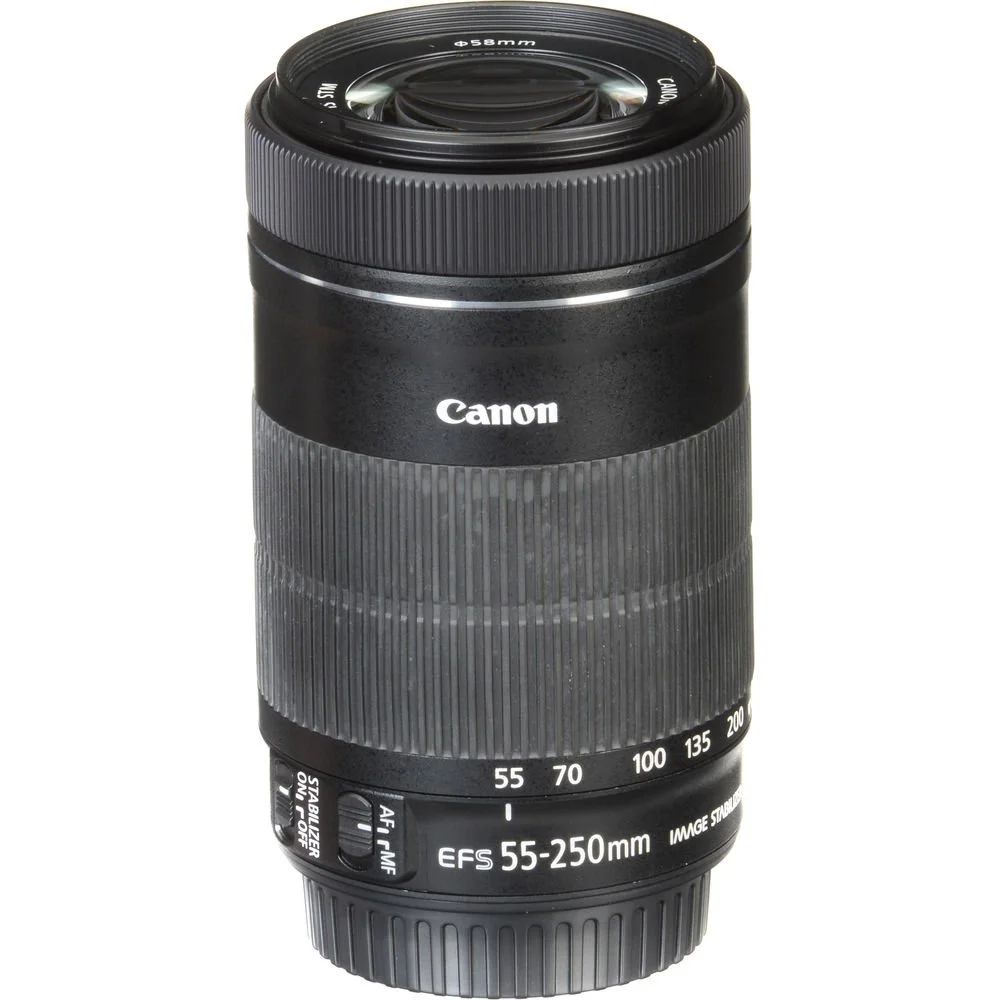
Key Features
EF-S Mount Lens/APS-C Format
88-400mm (35mm Equivalent)
Aperture Range: f/4 to f/32
One Ultra-Low Dispersion Element
Super Spectra Coating
STM Stepping AF Motor
Optical Image Stabilizer
Rounded 7-Blade Diaphragm
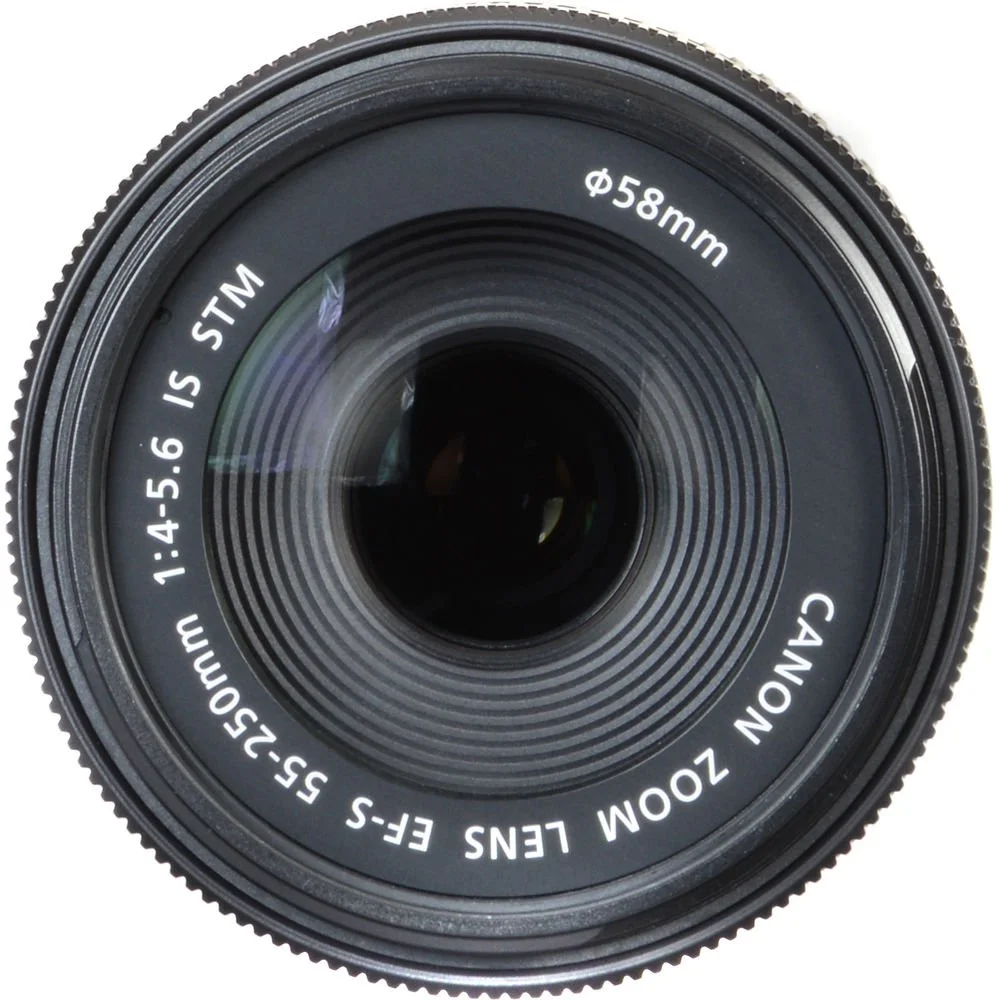
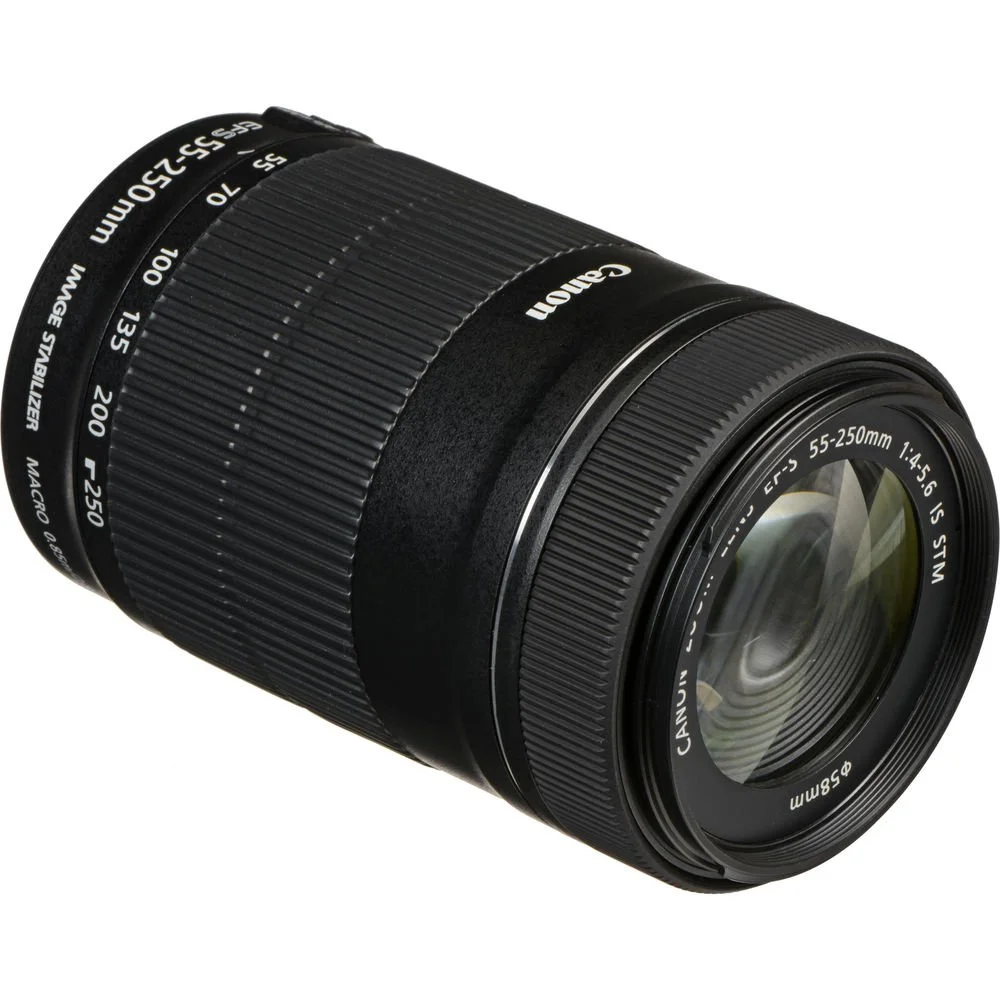
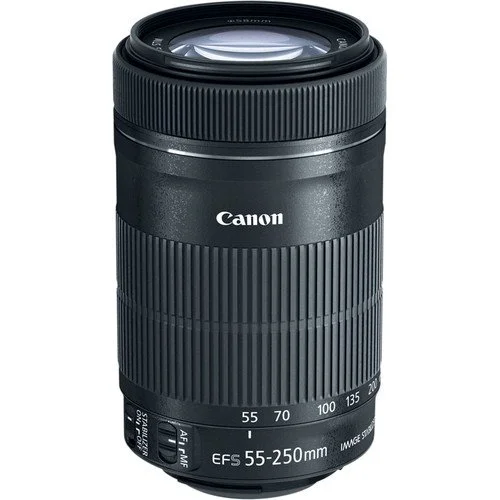
Suitable for distant subject matter, the EF-S 55-250mm f/4-5.6 IS STM is an 88-400mm-equivalent zoom for Canon APS-C DSLRs. This lens's long reach is enhanced by the inclusion of an Ultra-Low Dispersion element, which helps to greatly reduce color fringing and chromatic aberrations for greater clarity and color accuracy throughout the zoom range. A Super Spectra coating is also featured, and minimizes flare and ghosting in order to produce greater contrast when working in bright lighting conditions. Benefitting both photo and video applications, an STM stepping AF motor is used to realize quick and near-silent autofocus performance along with full-time manual focus override. Additionally, a four-stop-effective Image Stabilizer system is also featured and minimizes the appearance of camera shake for sharper handheld shooting.
Telephoto zoom is designed for APS-C-format Canon EF-S-mount DSLRs and provides an 88-400mm equivalent focal length range.
One Ultra-Low Dispersion glass element noticeably reduces color fringing and chromatic aberrations for high clarity and color fidelity.
Super Spectra coating has been applied to individual elements to minimize ghosting and flare for greater contrast and color neutrality when working in strong lighting conditions.
An Optical Image Stabilizer helps to minimize the appearance of camera shake by up to 3.5 stops to better enable working in low-light conditions and with slower shutter speeds.
Enhanced lens coatings minimize flare and ghosting in order to produce true colors with maintained contrast.
An STM stepping AF motor realizes smooth, near-silent autofocus that is complemented by a rear focus system, advanced AF algorithms, and a high-speed CPU for fast AF performance. Additionally, full-time manual focus override is also available.
Rounded seven-blade diaphragm contributes to a pleasing out of focus quality that benefits the use of shallow depth of field and selective focus techniques.
Key Features
EF-Mount Lens/Full-Frame Format
Aperture Range: f/4 to f/45
Super Spectra Coating
DC Micro Motor AF System
7-Blade Diaphragm
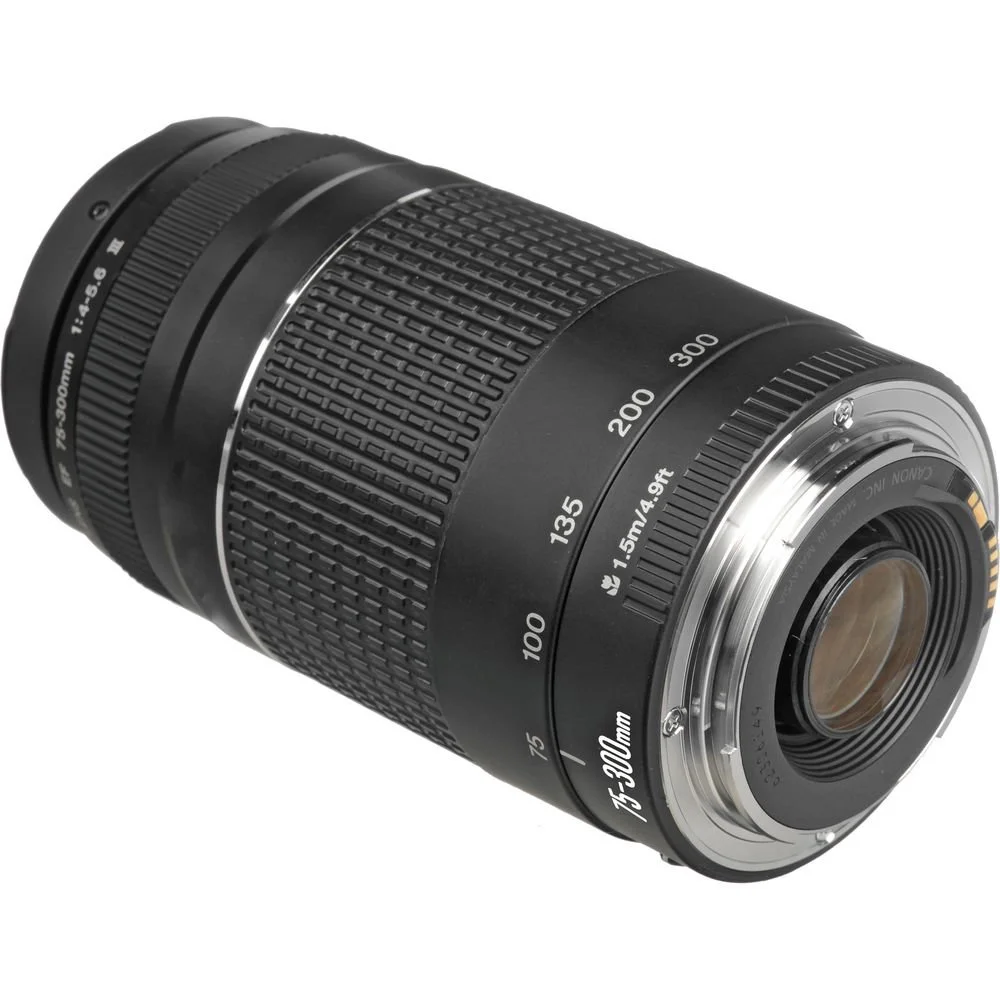
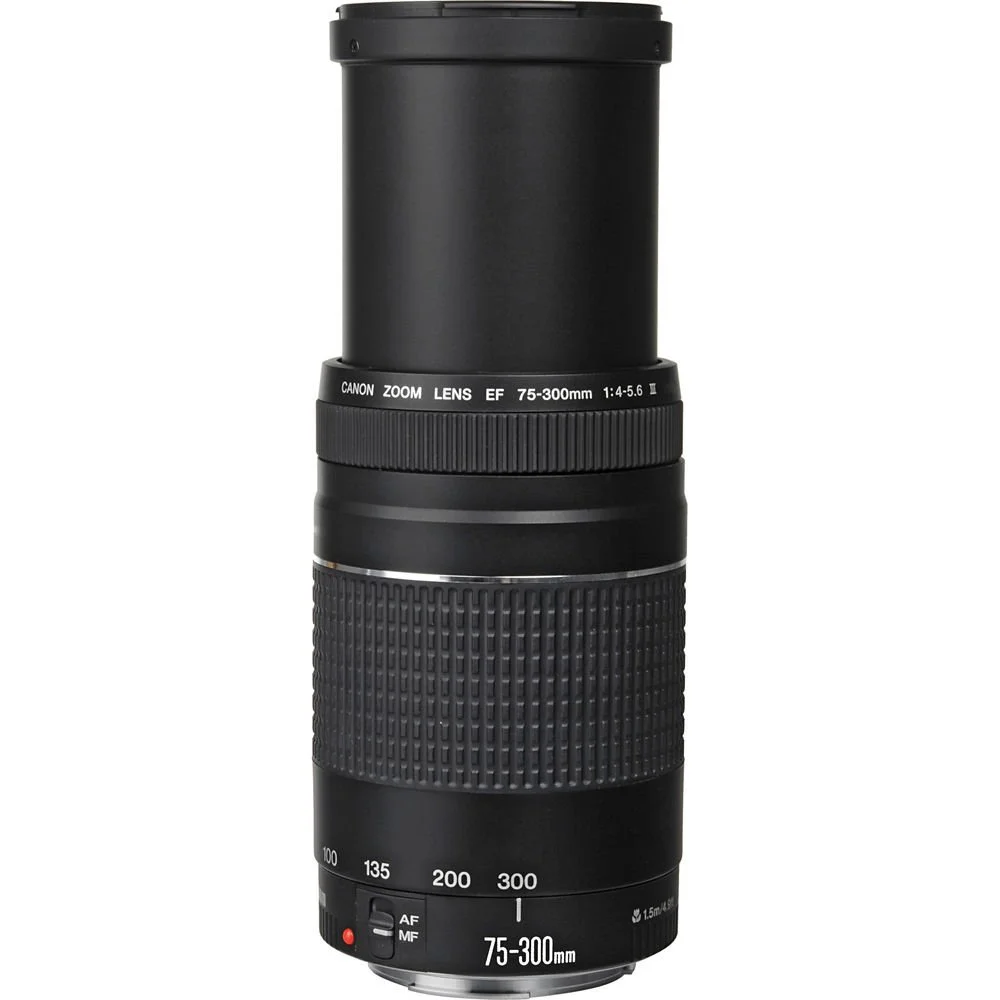
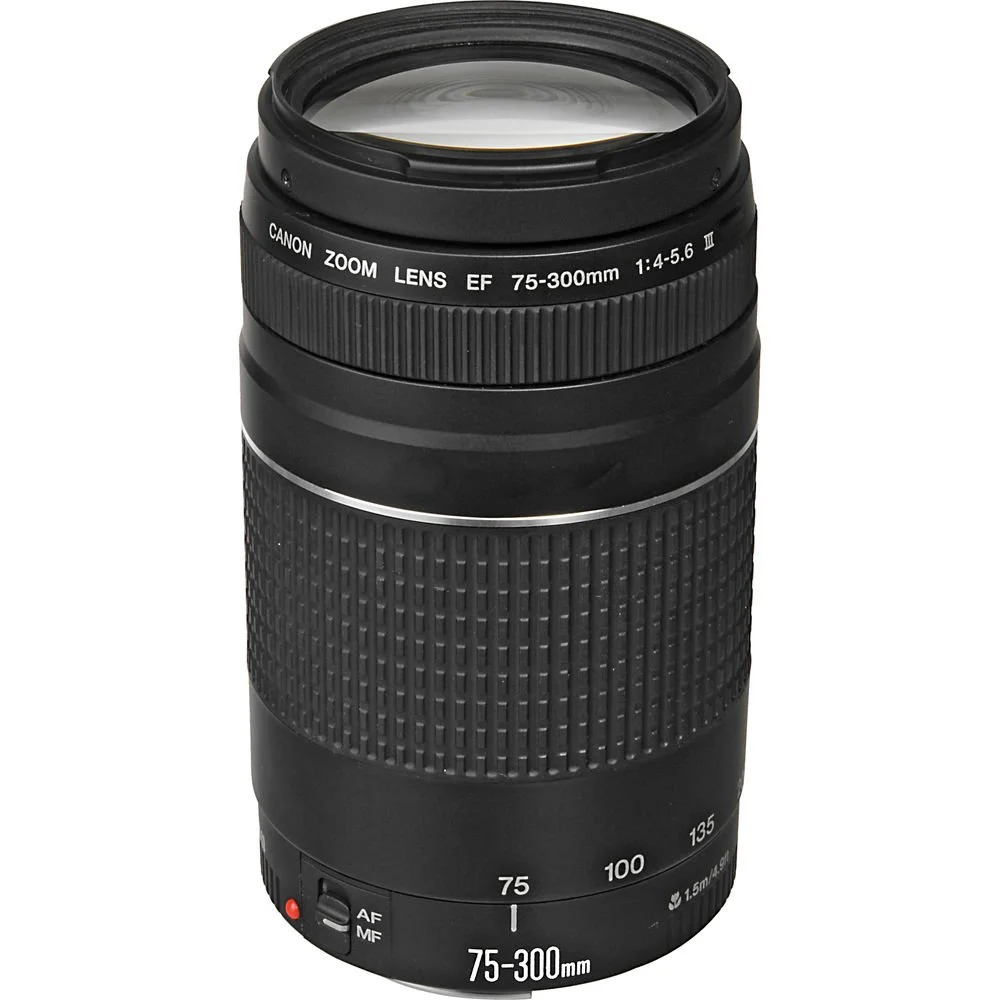
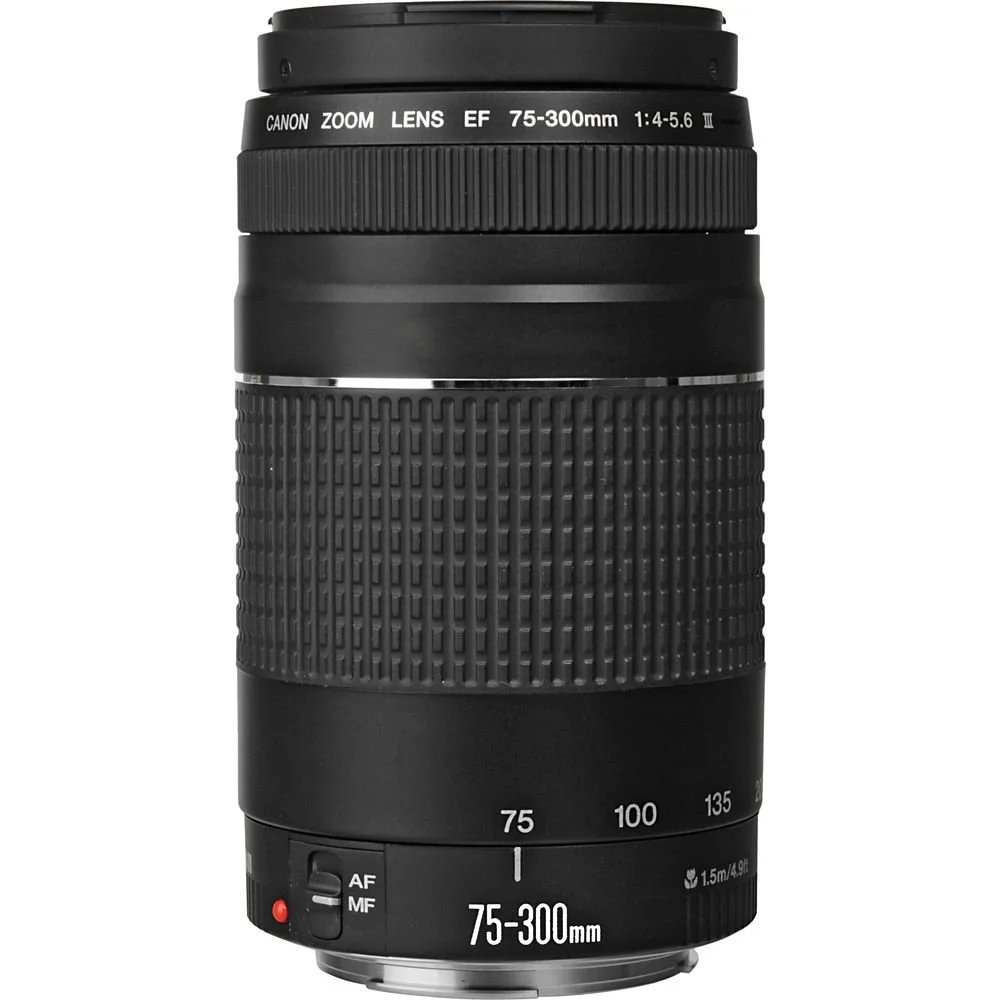
Featuring a versatile telephoto range, the EF 75-300mm f/4-5.6 III from Canon is a 4x zoom characterized by its relatively lightweight design and compact form factor. Well-suited for a variety of subjects, including portraiture and sports, this lens portrait to medium telephoto fields of view and utilizes a DC micro motor to provide fast and accurate autofocus performance. Benefitting image quality, a Super Spectra coating has been applied to individual elements to reduce lens flare and ghosting in order to achieve high contrast and accurate colors. Additionally, it features a seven-blade diaphragm to produce smooth and pleasing bokeh.

Versatile telephoto zoom is designed for full-frame Canon EF-mount DSLRs, however can also be used with APS-C models where it provides a 120-480mm equivalent focal length range.
Super Spectra coating has been applied to individual elements to minimize ghosting and flare for greater contrast and color neutrality when working in strong lighting conditions.
DC micro motor autofocus system is quick and pairs with an electromagnetic diaphragm to complement photographing at fast continuous speeds.
Seven-blade diaphragm contributes to a pleasing bokeh quality.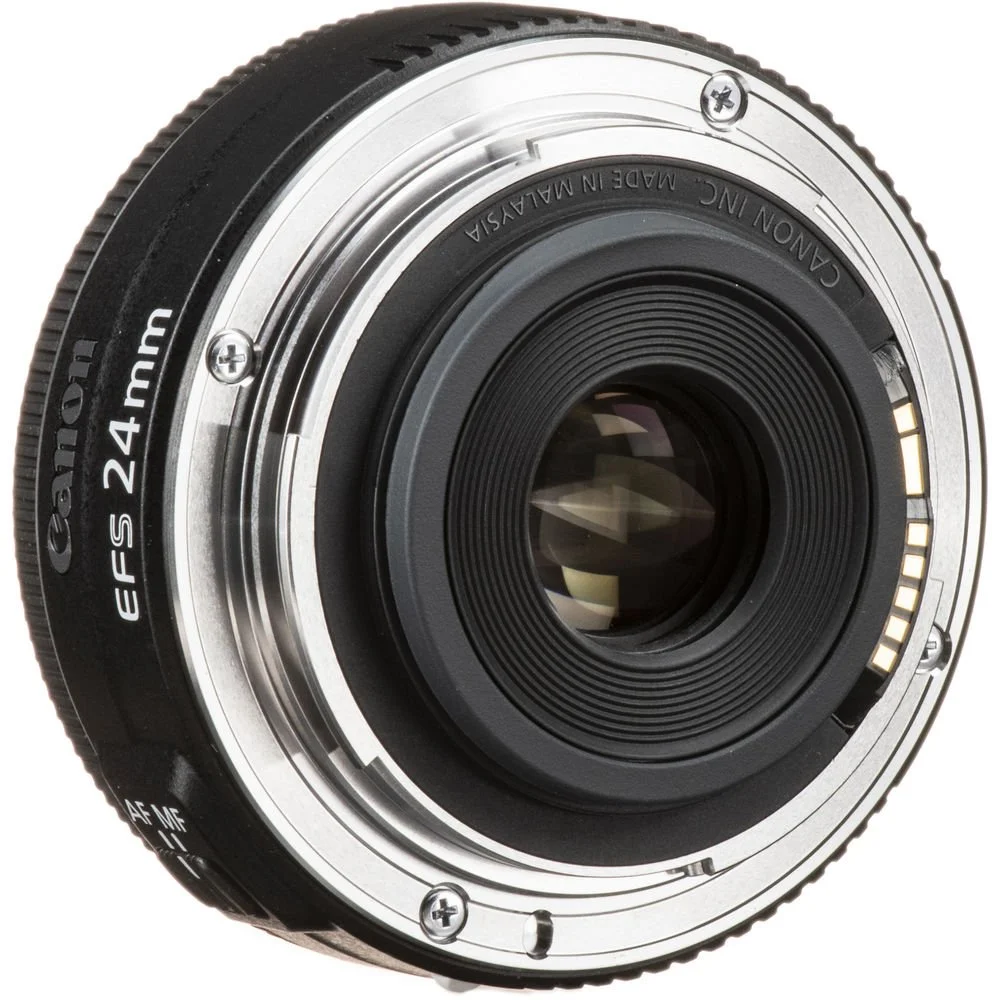
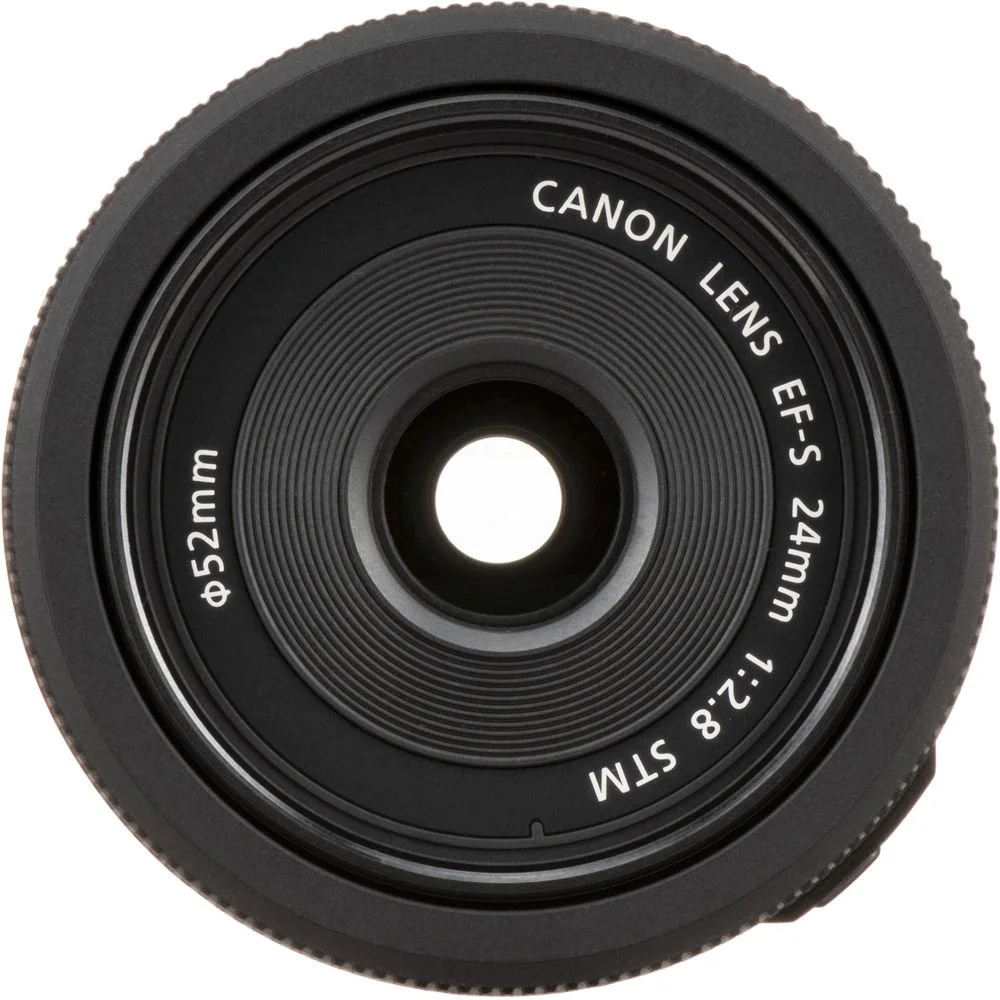
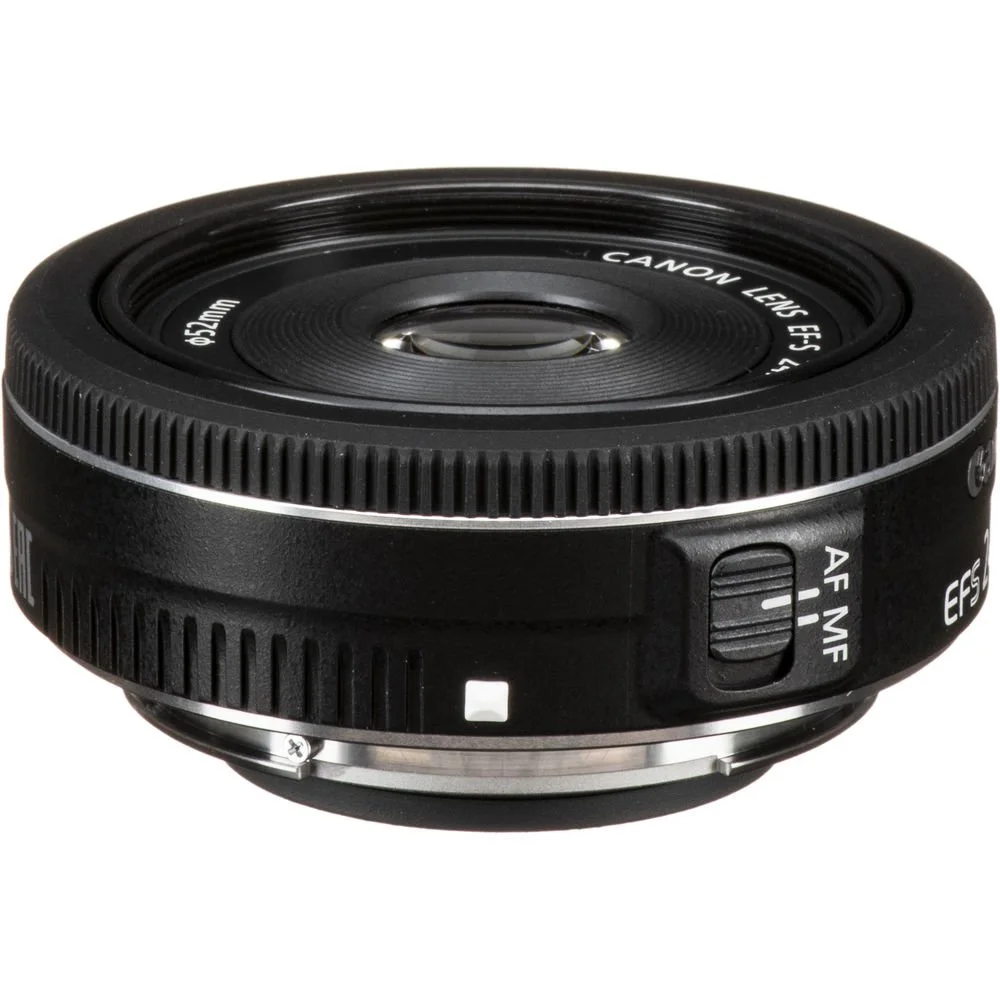
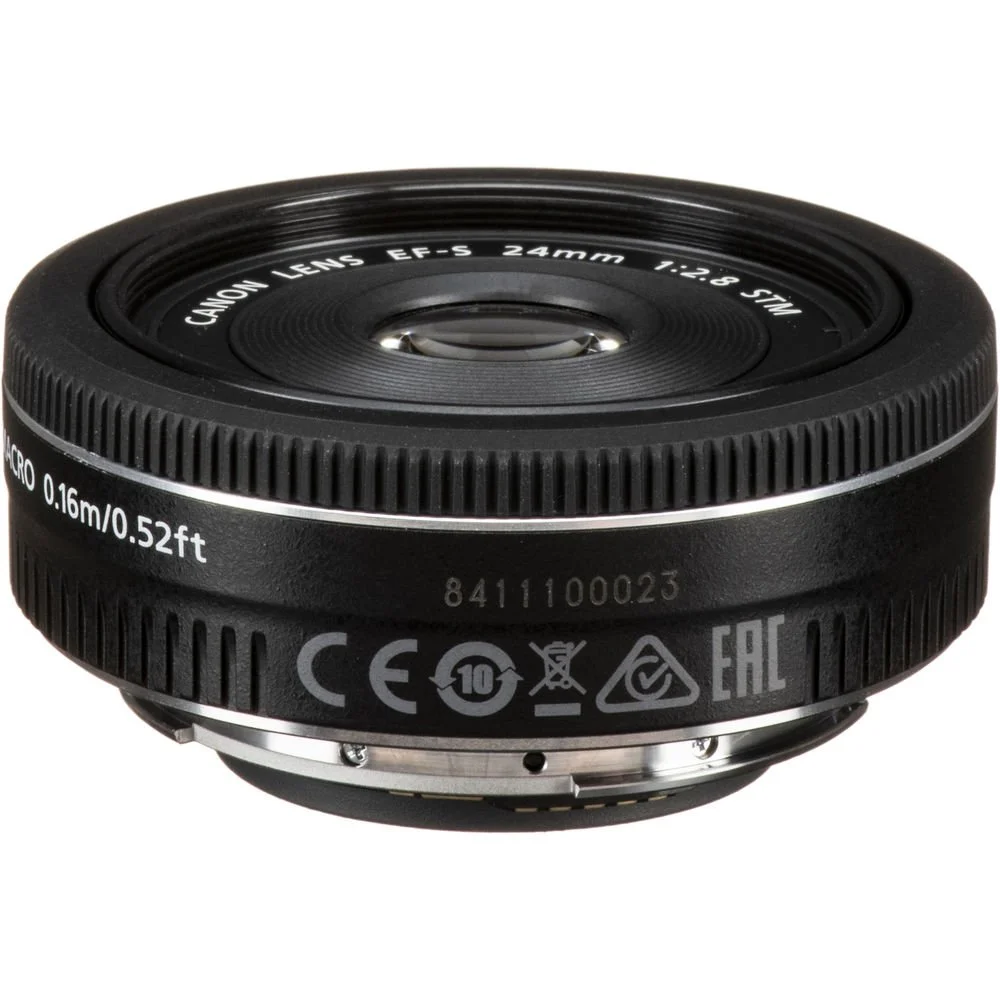
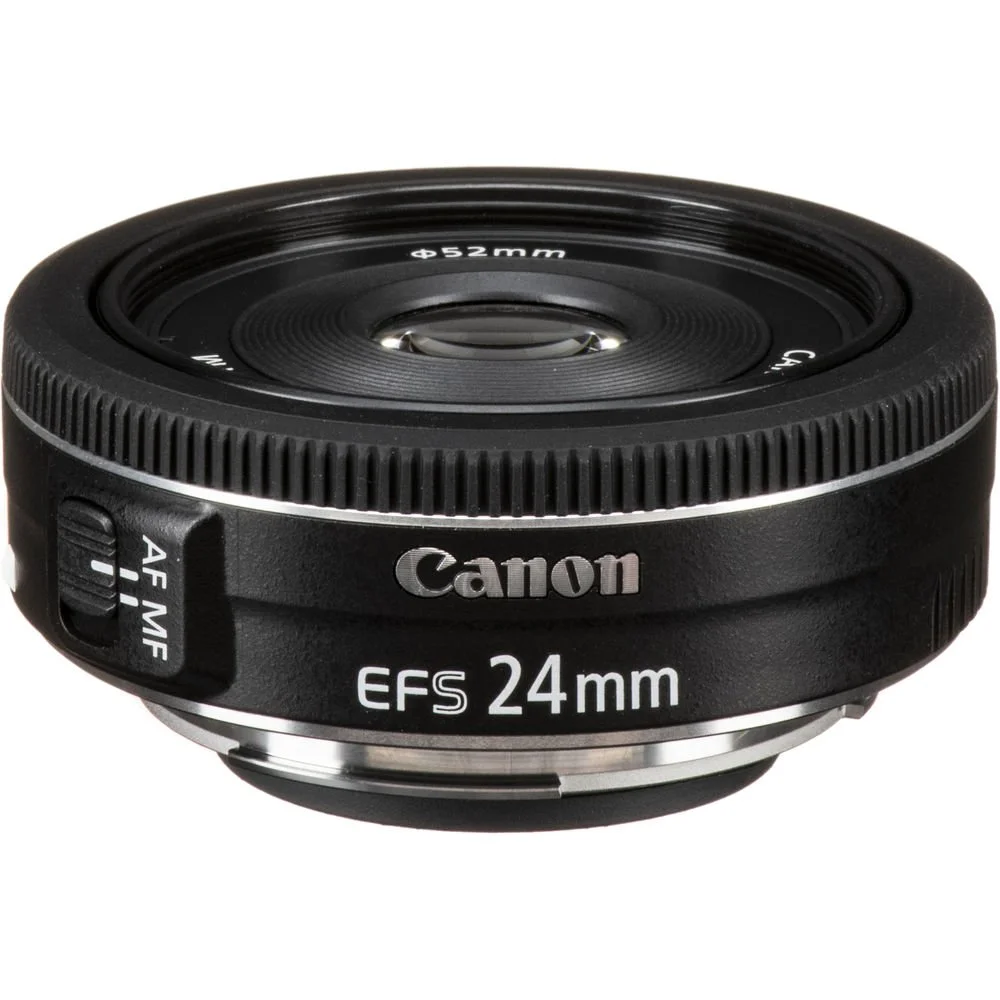
Recognizable by its truly thin profile, along with an advanced autofocus motor, the EF-S 24mm f/2.8 STM from Canon is a 38.4mm-equivalent prime designed for APS-C-format DSLRs. Its optical design features one aspherical element, which helps to reduce distortion and spherical aberrations for high sharpness and clarity. A Super Spectra coating has also been applied, which helps to minimize lens flare and ghosting for improved contrast and color fidelity in bright lighting conditions. Additionally, benefitting both photo and video applications, an STM stepping AF motor is used to realize quick, accurate, and near-silent autofocus performance.
Short normal-length prime is designed for use with APS-C-format Canon EF-S-mount DSLRs and provides a 38.4mm equivalent focal length.
Modestly bright f/2.8 maximum aperture benefits working in low-light, affords control over depth of field, and helps to keep the overall physical design compact and lightweight.
Pancake form factor measures less than 1"-thick for an ultra-portable, versatile design.
One aspherical element limits distortion and spherical aberration in order to realize greater sharpness and accurate rendering.
Super Spectra coating has been applied to individual elements to minimize ghosting and flare for greater contrast and color neutrality when working in strong lighting conditions.
An STM stepping AF motor realizes smooth, near-silent autofocus that is complemented by a rear focus system, advanced AF algorithms, and a high-speed CPU for fast AF performance. Additionally, full-time manual focus override is also available.
Rounded seven-blade diaphragm contributes to a pleasing out of focus quality that benefits the use of shallow depth of field and selective focus techniques.
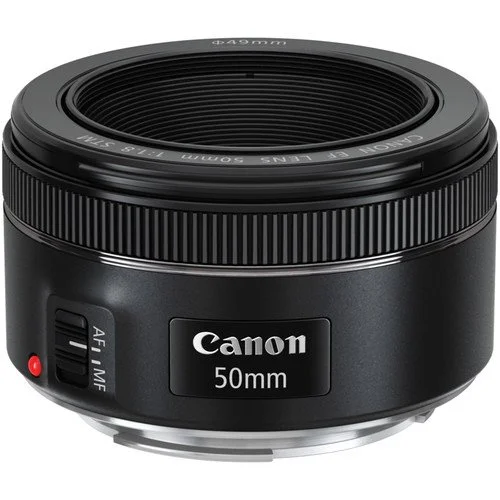
Key Features
EF-Mount Lens/Full-Frame Format
Aperture Range: f/1.8 to f/22
Super Spectra Coating
STM Stepping AF Motor
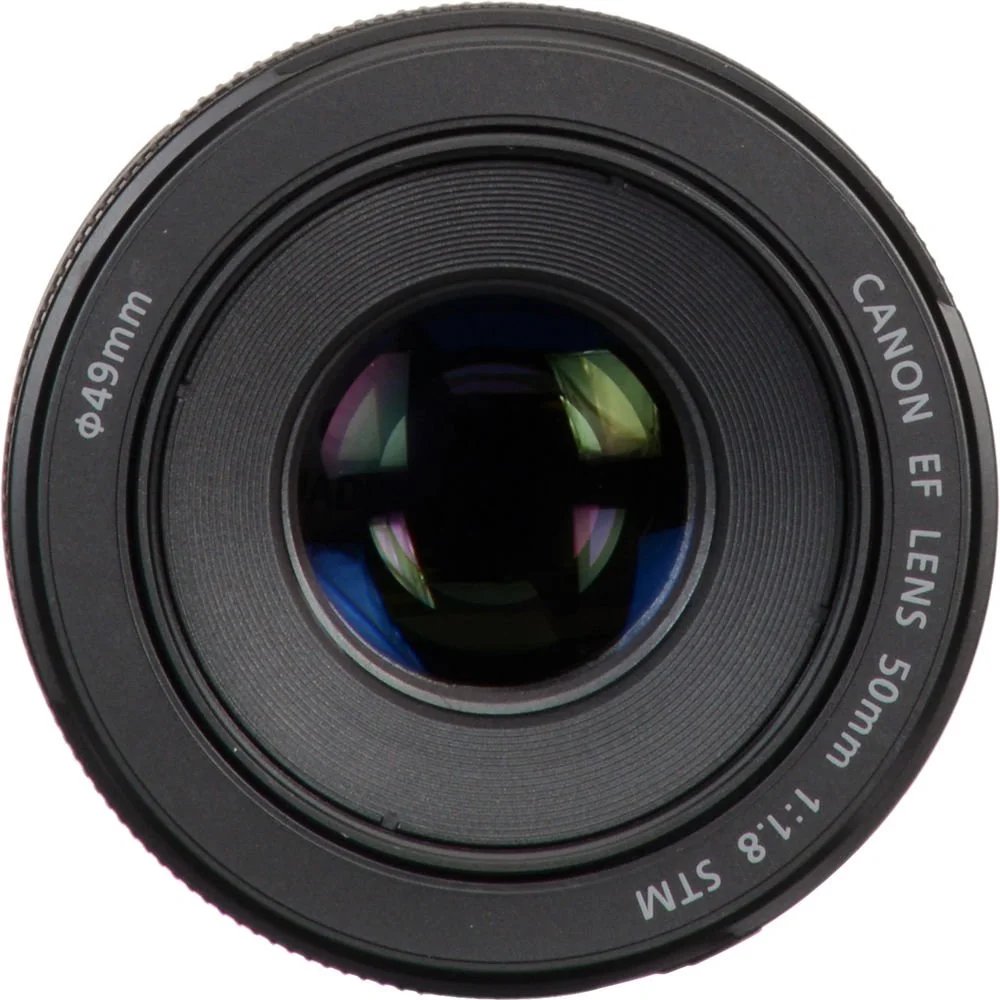
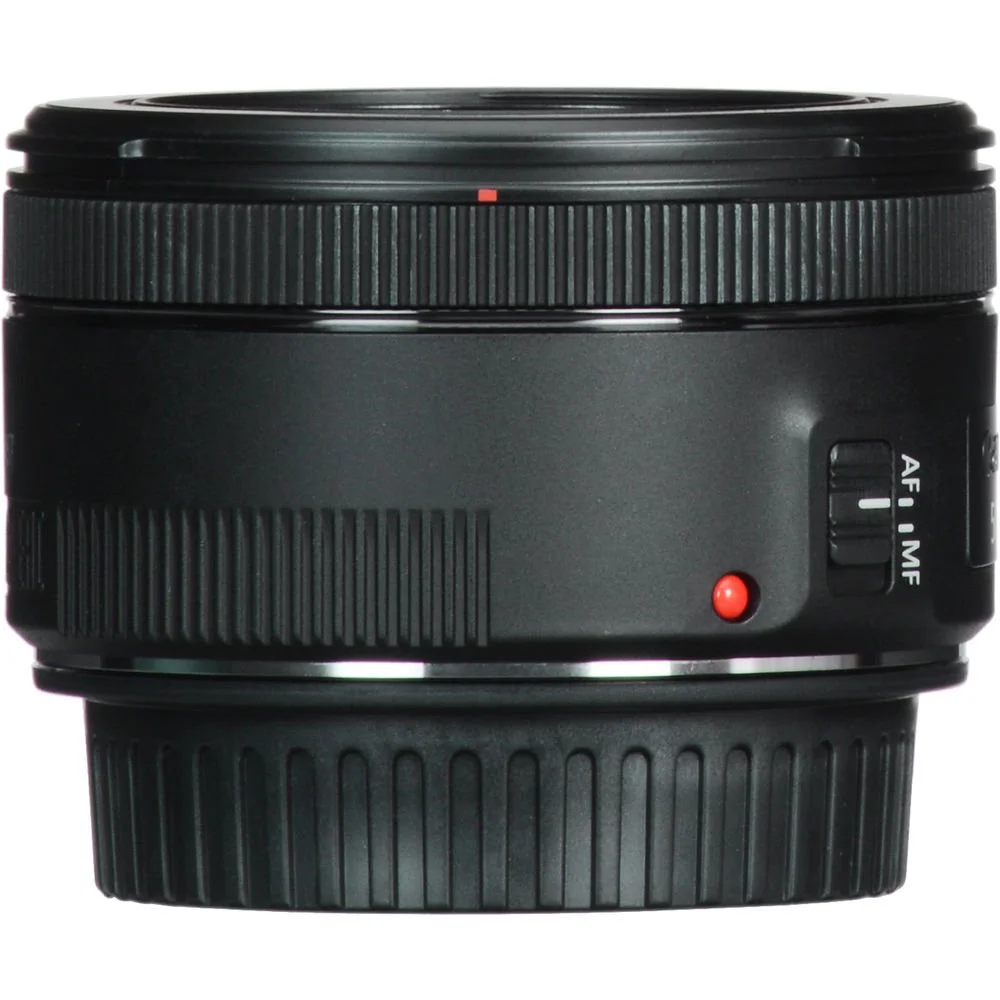
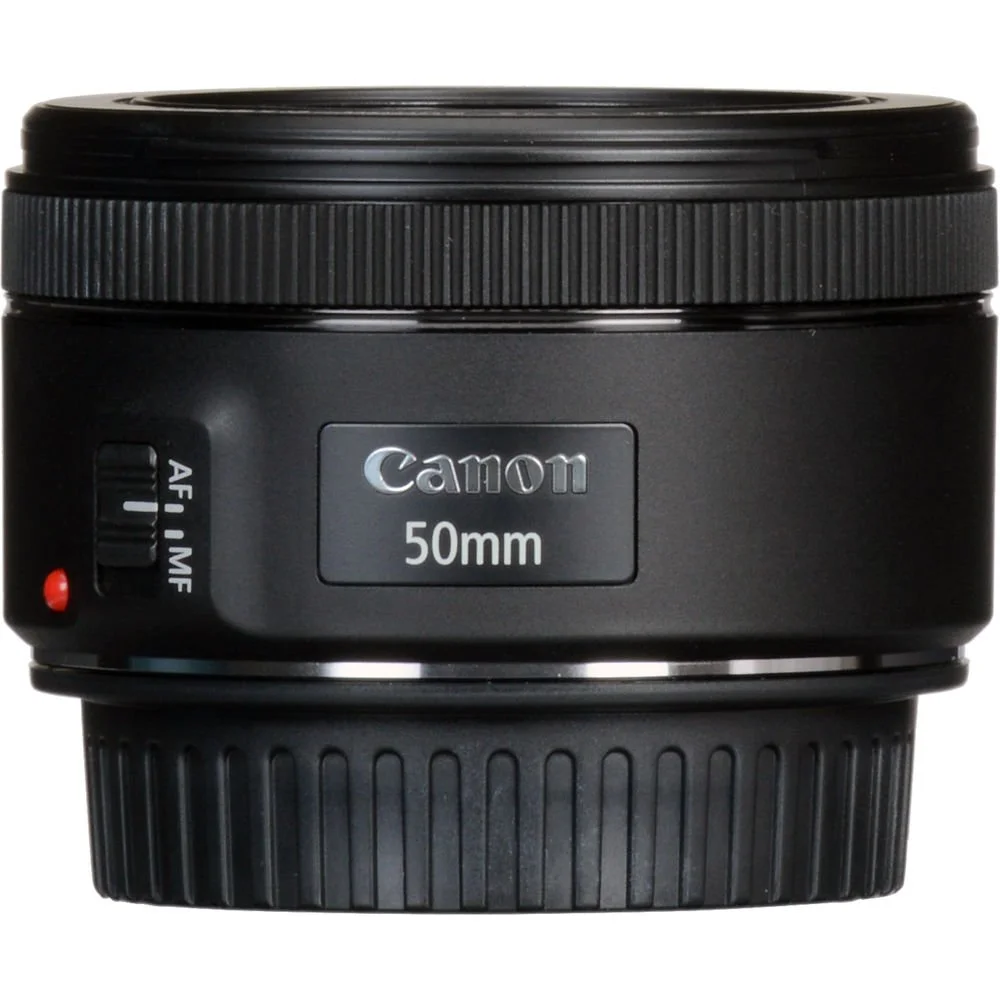
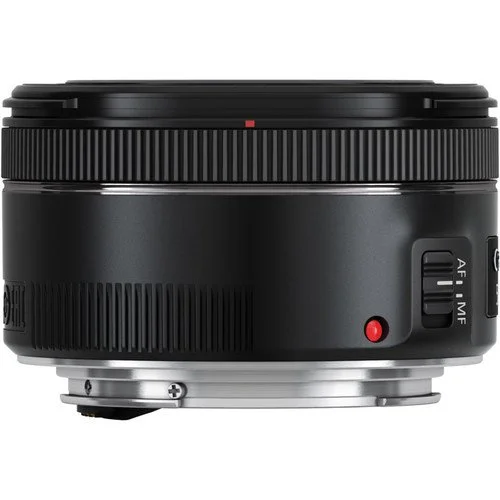
One of the most versatile focal lengths available, the EF 50mm f/1.8 STM Lens from Canon is a compact, normal-length prime well-suited to everyday shooting. The bright f/1.8 maximum aperture benefits working in difficult lighting conditions and also affords increased control over depth of field for isolating subject matter. Individual elements feature a Super Spectra coating to help minimize flare and ghosting to realize greater contrast and color accuracy when working in backlit and harsh conditions. Additionally, an STM stepping AF motor is used to realize quick and near-silent autofocus performance along with full-time manual focus override.
Normal-length prime is designed for full-frame Canon EF-mount DSLRs, however can also be used with APS-C models where it provides an 80mm equivalent focal length.
Bright f/1.8 maximum aperture enables control over depth of field for selective focus applications and also benefits working in low-light situations.
Super Spectra coating has been applied to individual elements to minimize ghosting and flare for greater contrast and color neutrality when working in strong lighting conditions.
An STM stepping AF motor realizes smooth, near-silent autofocus that is complemented by advanced AF algorithms and a high-speed CPU for fast AF performance. Additionally, full-time manual focus override is also available.
Redeveloped physical design incorporates a metal lens mount for durability as well as a re-located focusing ring to maintain a compact form factor.
Rounded seven-blade diaphragm contributes to a pleasing out of focus quality that benefits the use of shallow depth of field and selective focus techniques.
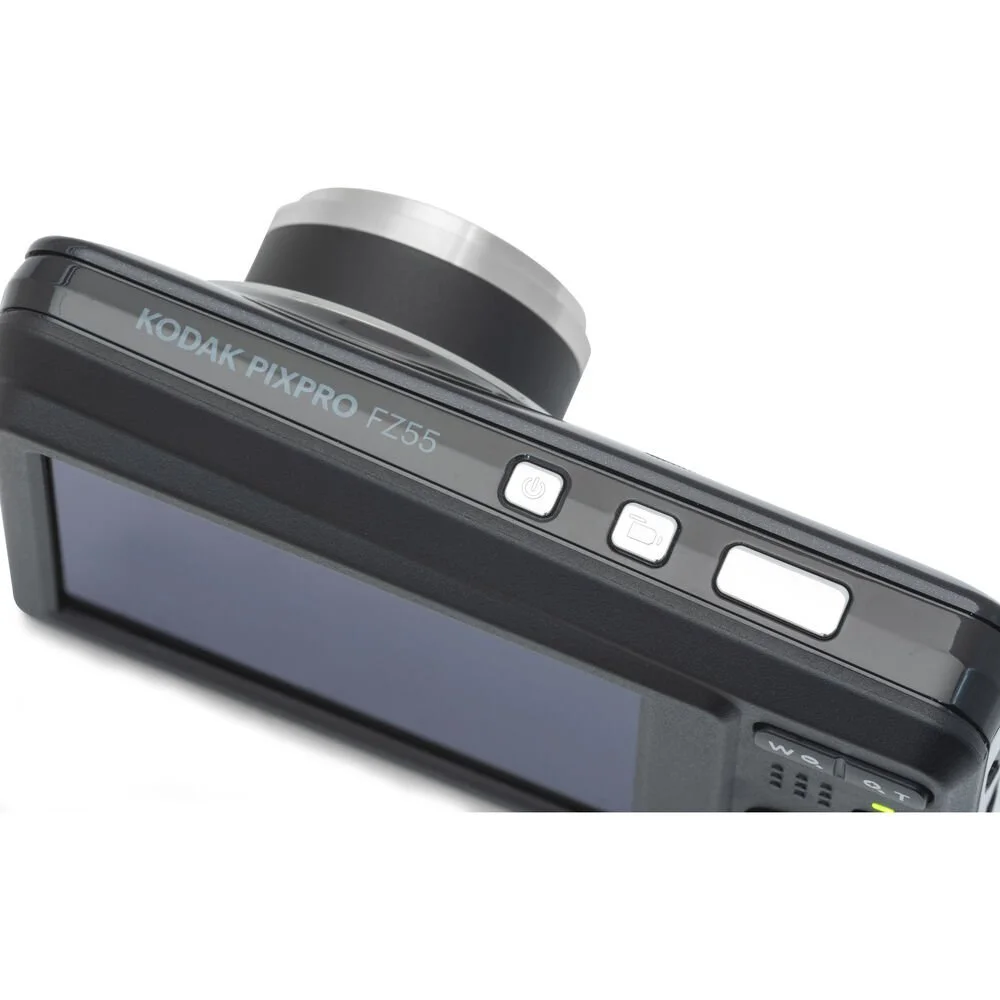
Key Features
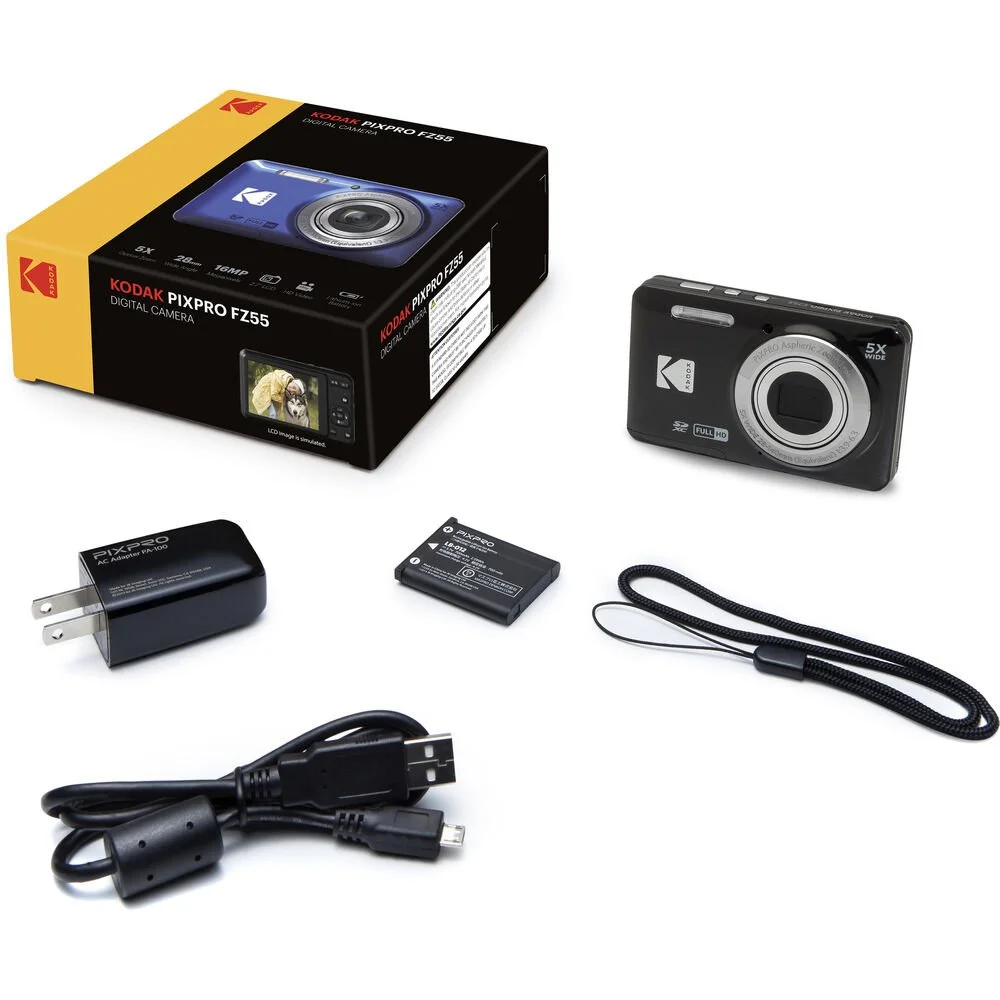
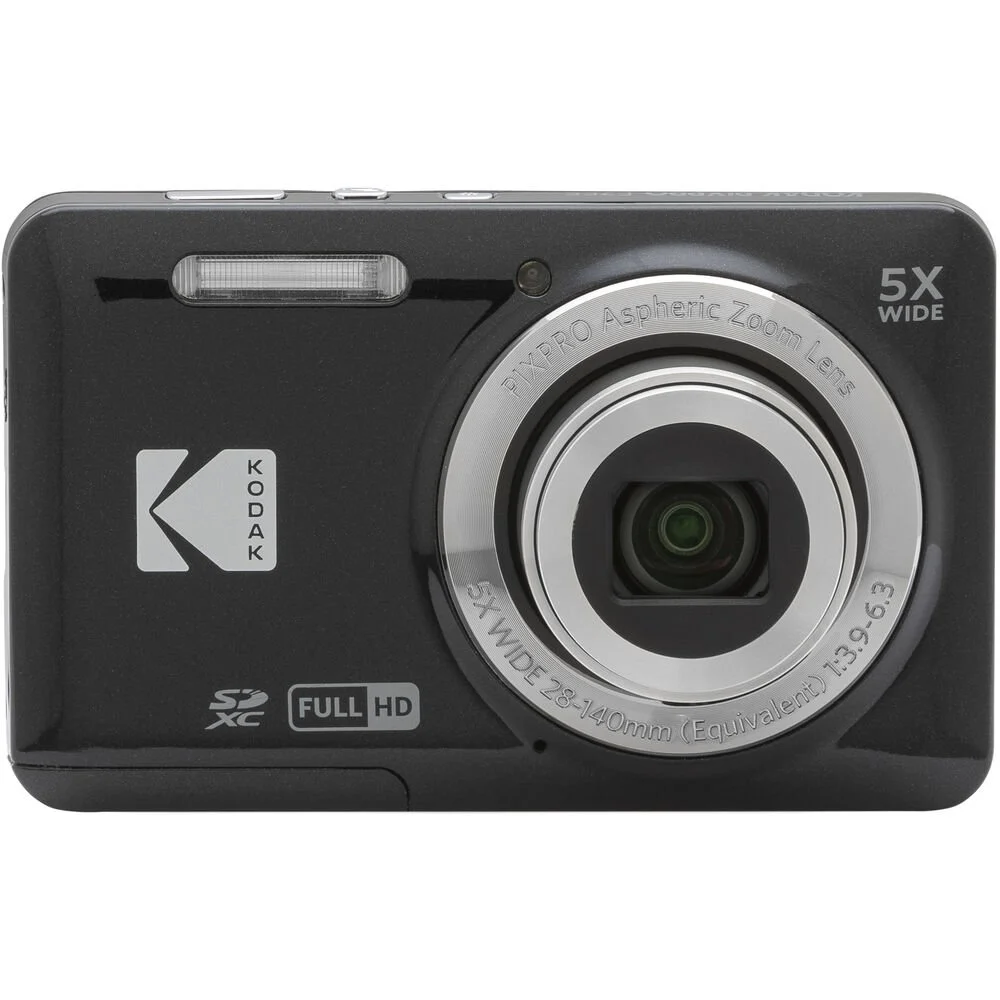
28mm Wide-Angle Lens
16MP 1/2.3" CMOS Sensor
5x Optical Zoom Lens
2.7" LCD Screen
Full HD 1080p Video Recording at 30 fps
Digital Image Stabilization
Built-In Flash
Rechargeable Lithium-Ion Battery
Panorama Mode
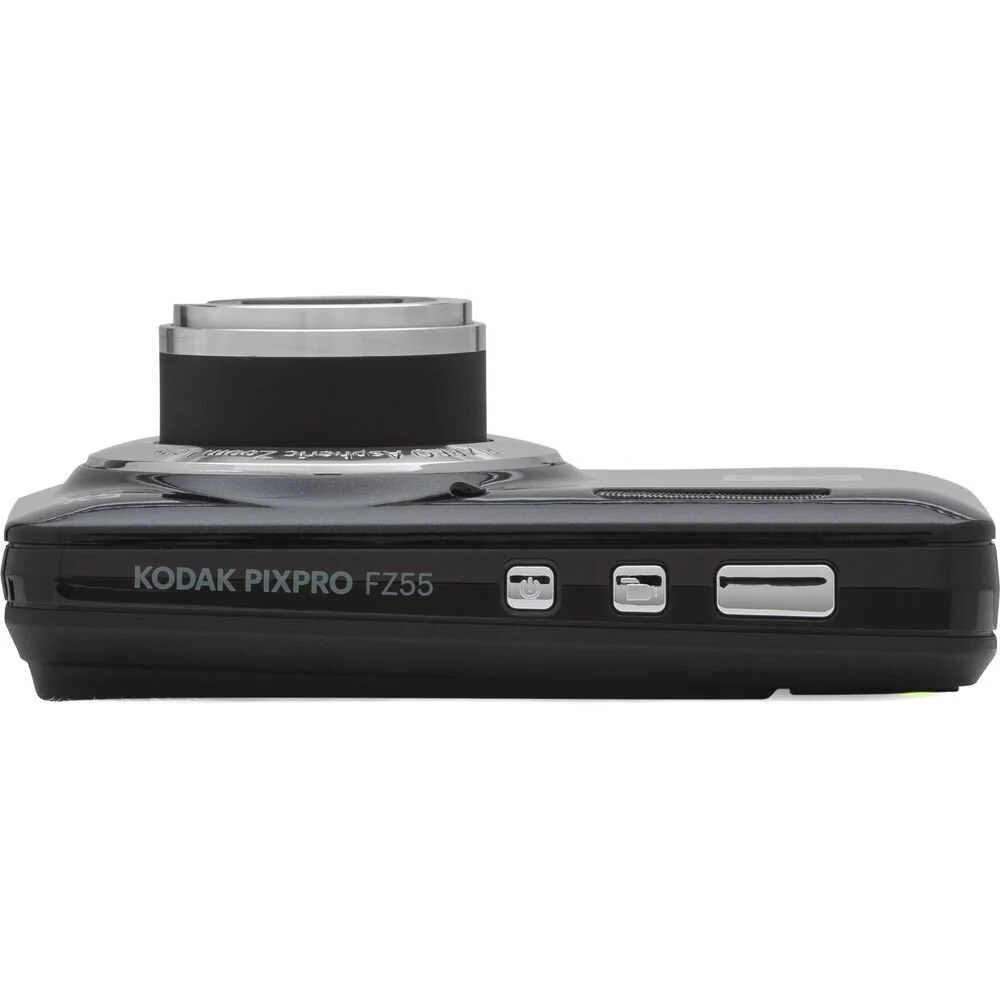
he Kodak PIXPRO FZ55 Digital Camera in black is a small and easy-to-use Friendly Zoom camera from the Kodak PIXPRO collection. This point-and-shoot camera features a 28mm wide-angle lens with a 16MP 1/2.3" CMOS sensor and 2.7" LCD screen. The PIXPRO FZ55 has multiple flash and shooting modes along with a variety of detection features, including face and smile detection. The PIXPRO FZ55 is powered by a rechargeable lithium-ion battery that can be charged inside the camera.
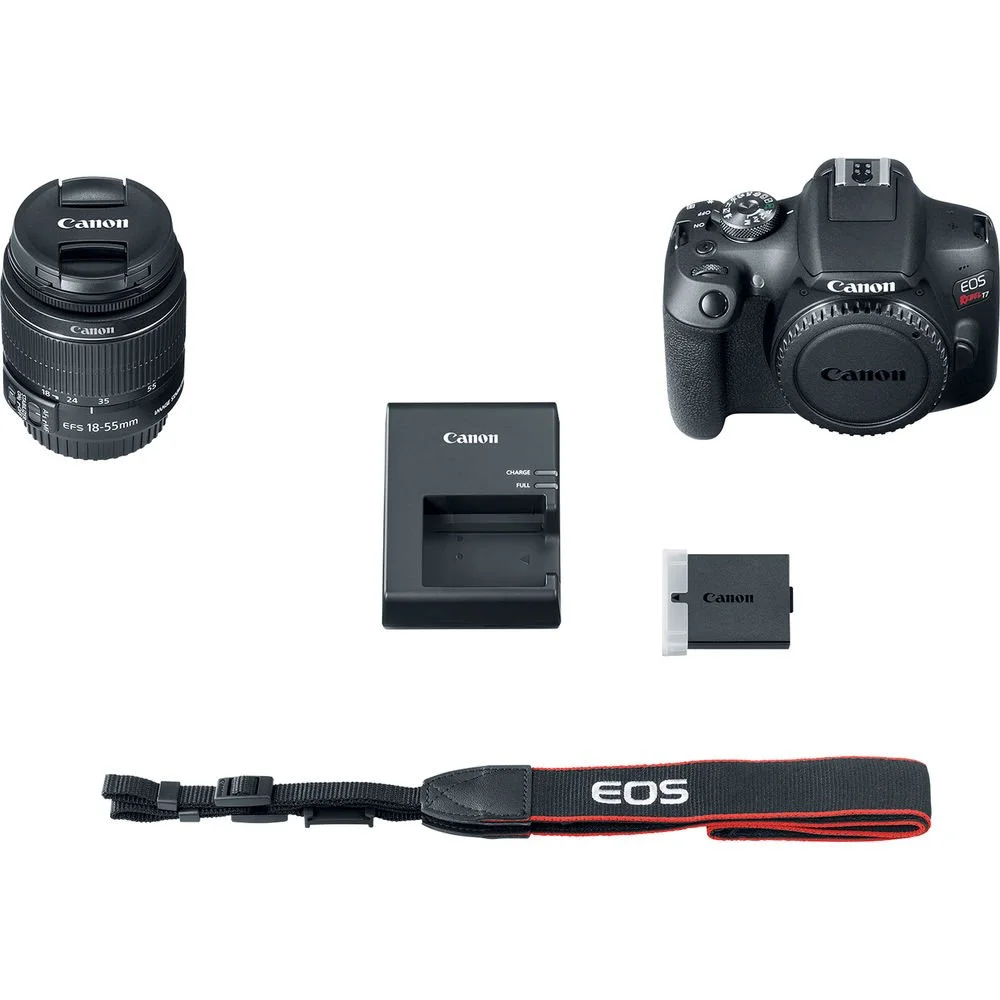
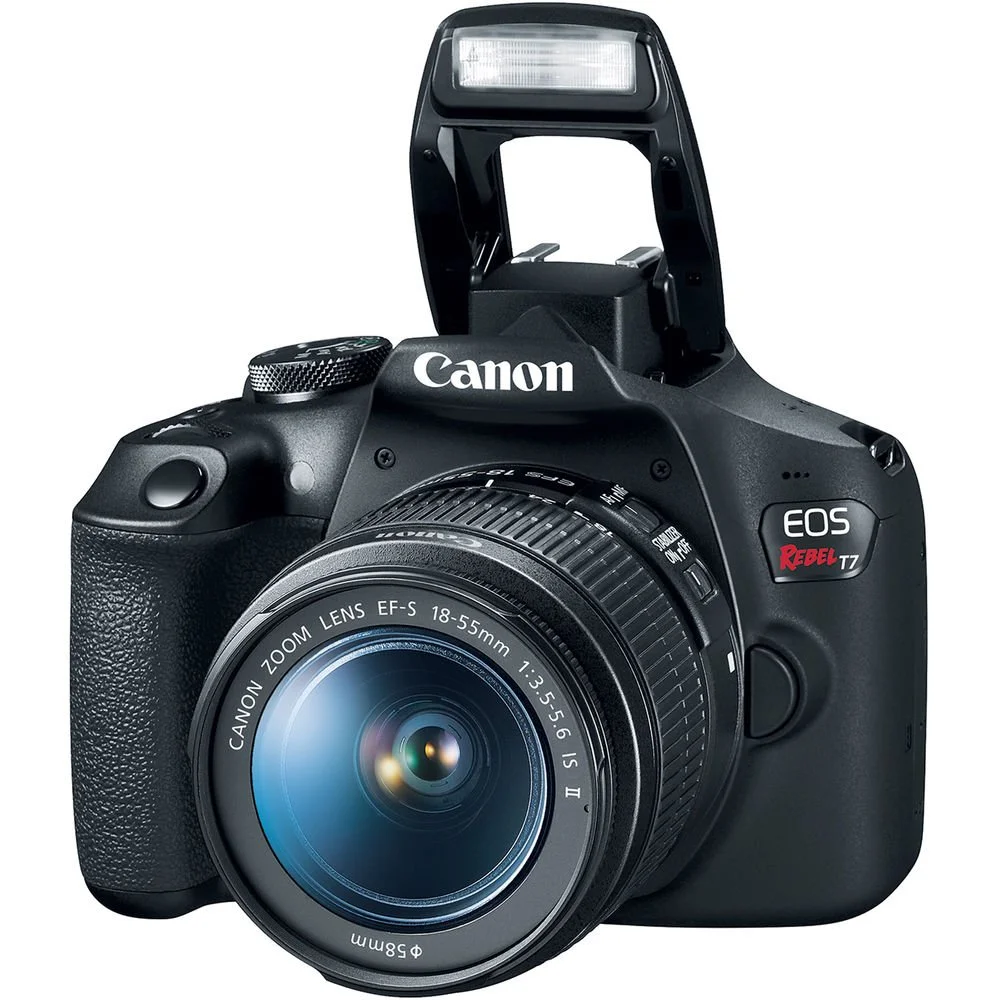
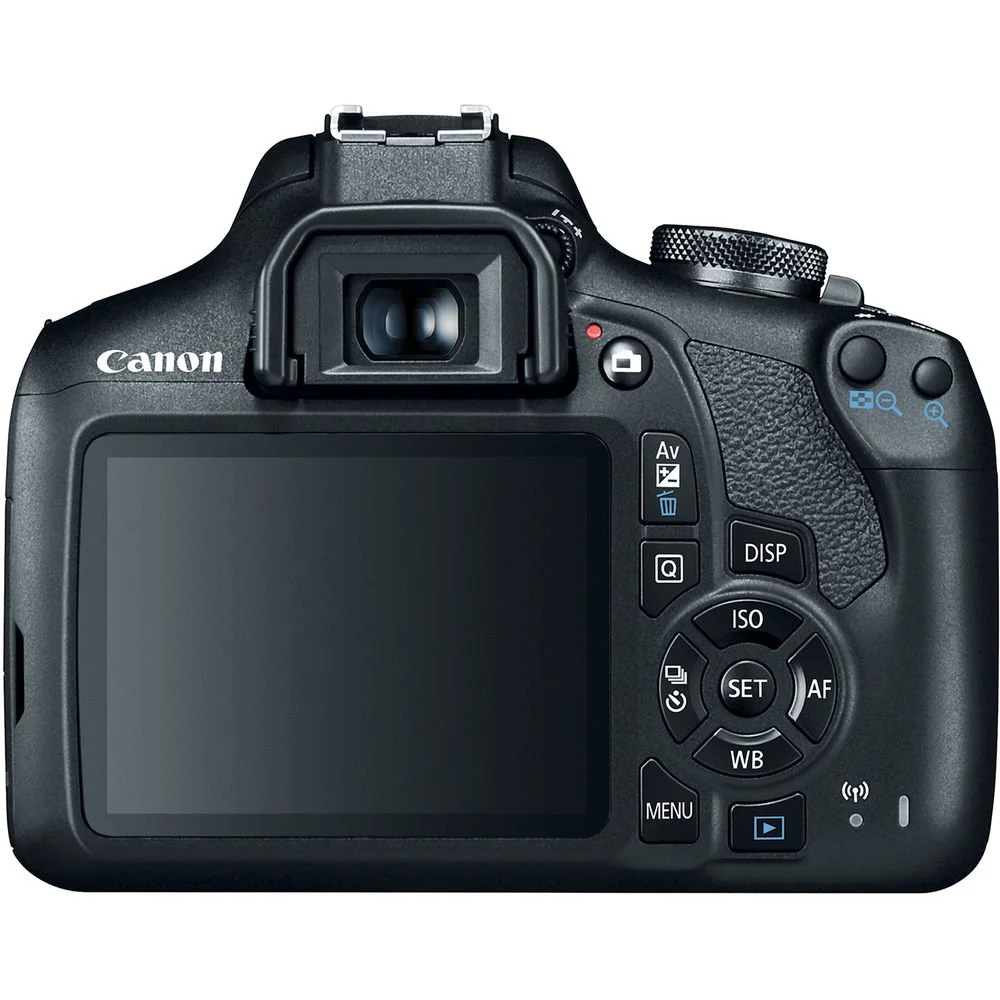
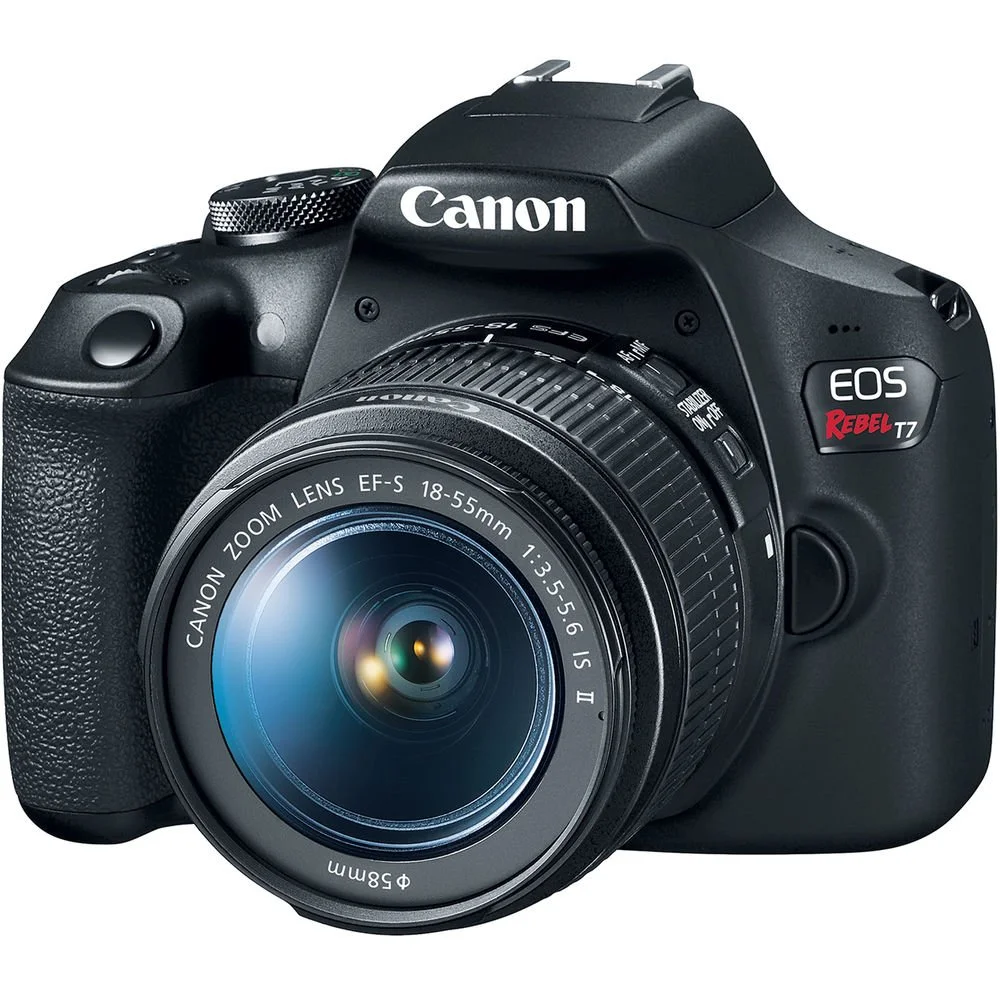
Compact and capable, the Canon EOS Rebel T7 is a sleek entry-level DSLR featuring versatile imaging capabilities and a helpful feature-set. Incorporating a 24.1MP APS-C CMOS sensor and DIGIC 4+ image processor, the T7 produces high-resolution stills with notable clarity, reduced noise, and a flexible native sensitivity range from ISO 100-6400 for working in a variety of lighting conditions. The sensor and processor also afford shooting continuously at up to 3 fps for photographing moving subjects, as well as Full HD 1080/30p video recording. Benefitting shooting with the optical viewfinder, a 9-point AF system incorporates a single center cross-type AF point for increased accuracy and focusing speed, and a contrast-detection focusing system offers refined autofocus precision when recording video or photographing in live view. The rear 3.0" 920k-dot LCD offers a bright, clear image for playback and review, and built-in Wi-Fi with NFC also offers the ability to wirelessly share imagery from your camera to a linked mobile device for instant online sharing.
24.1MP APS-C CMOS Sensor and DIGIC 4+ Image Processor
At the heart of the Rebel T7 is an apt 24.1MP APS-C CMOS sensor and DIGIC 4+ image processor, which combine to provide both speed throughout the camera system as well as notable image quality. Up to 3 fps shooting is possible to suit photographing moving subjects—for up to 150 consecutive JPEGs in a burst or up to 11 consecutive raw frames—and Full HD 1080p video at 30 fps can also be recorded. For working in a variety of lighting conditions, the sensitivity range of ISO 100-6400 can be further expanded to ISO 12800 to benefit photographing in low-light situations.
9-Point AF System
A 9-point phase-detection autofocus system incorporates a single cross-type point to lend a high degree of focusing accuracy in mixed and low-contrast lighting conditions. This focusing system also utilizes an AI Servo AF mechanism for faster tracking and more accurate results.
Body Design and Built-In Wi-Fi
A large 3.0" 920k-dot LCD monitor serves as a bright means for live view shooting and image playback.
An optical pentamirror viewfinder presents a bright, clear view of the scene when shooting stills and is ideal for quick-paced subject tracking and working in bright conditions.
Built-in Wi-Fi with NFC permits pairing the DSLR with a smartphone or tablet for wirelessly sharing photos and movies for instant online posting.
Wi-Fi connectivity also enables wireless remote control over the camera from linked mobile devices using the Camera Connect app.
Compatible with the full lineup of Canon EF and EF-S-mount lenses.
EOS Webcam Utility
Extending the capabilities of the camera, Canon's EOS Webcam Utility software lets you turn your camera into a versatile webcam by just connecting it to a computer via USB. Compatible with a variety of streaming apps, including ZOOM, YouTube Live, Microsoft Teams, and more, this software also maintains the ability to record internally while livestreaming.
EF-S 18-55mm f/3.5-5.6 IS II Lens
Included with the camera body is the EF-S 18-55mm f/3.5-5.6 IS II lens, which provides a 28.8-88mm equivalent focal length range that covers wide-angle to short telephoto perspectives. One aspherical element is featured in the optical design, to control spherical aberrations and contribute to higher clarity, and an Optical Image Stabilizer minimizes the appearance of camera shake for sharper handheld shooting.
Other Camera Features
Scene Intelligent Auto mode intelligently selects the appropriate camera settings based on recognized scene types for accurate exposures.
A Feature Guide helps to familiarize one with the various camera features and displays short descriptions of shooting modes, settings, and effects for easy operation.
Basic+ and Creative Auto modes simplify the process of achieving certain creative looks.
Creative Filters allow you to refine the look of imagery in-camera, and include Toy Camera, Fisheye, and Miniature Effect, among others.
Auto White Balance features a 'white priority' setting to maintain accurate color rendering and adjust for warmer tones when photographing in tungsten-lit conditions.
Picture Style: Auto, Standard, Portrait, Landscape, Neutral, Faithful, Monochrome, and User Defined 1-3.
Basic Zone exposure control settings: Scene Intelligent Auto, Flash Off, Creative Auto, Portrait, Landscape, Close-Up, Sports, Food, and Night Portrait.
Language support: English, German, French, Dutch, Danish, Portuguese, Finnish, Italian, Norwegian, Swedish, Spanish, Greek, Russian, Polish, Hungarian, Czech, Romanian, Ukraine, Turkish, Arabic, Thai, Simplified/Traditional Chinese, Korean, and Japanese.
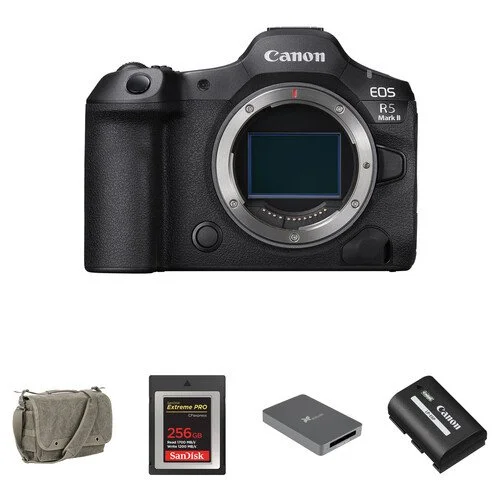
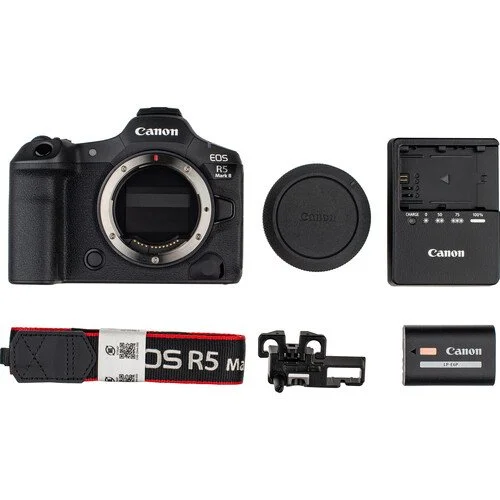
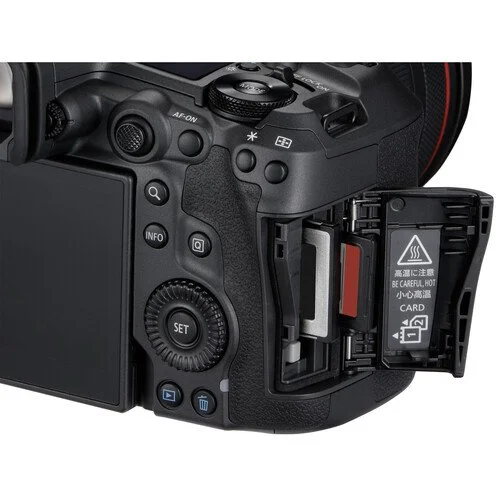
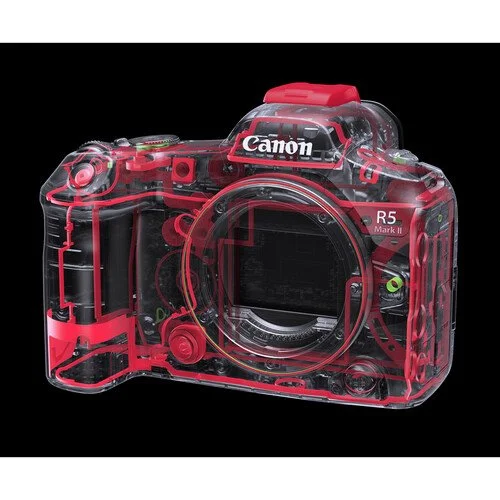
Key Features
Quality Essentials to Start Shooting
Backup Power, Protection & Memory
Bag, Spare Battery & Memory Card
45MP Full-Frame Stacked BSI CMOS Sensor
DIGIC Accelerator Processing
Dual Pixel Intelligent AF, Eye Control
8K 60 Raw/4K 60 SRAW/4K 120 10-Bit Video
Up to 30 fps, Pre-Continuous Shoot Mode
5.76m-Dot EVF with OVF Sim. View Assist
3.2" Vari-Angle Touchscreen LCD
A Stacked Sensor-Processor Combo
The R5 Mark II's new sensor maintains the high resolution of its predecessor while introducing a stacked, back-illuminated design that makes room for Canon's latest image processor, the DIGIC Accelerator. Operating alongside the stalwart DIGIC X, the camera combines the raw image data with high-volume, deep-learning datasets to produce gains in subject tracking and recognition, pre-continuous capture, blackout-free shooting, video resolution, maximum recording time, and more - making the R5 Mark II a powerful and comprehensive professional creator's toolkit.
Autofocus and Deep Learning
The improved processing speeds benefit the already robust autofocus, incorporating deep learning datasets in its Dual Pixel Intelligence AF to produce advancements in subject recognition and tracking while also improving on the Eye Control Focus feature introduced in the EOS R3.Eye Control Focus
Reintroduced in the EOS R3, Eye Control AF allows shooters to use their eye to initiate where the focus point is simply by looking through the electronic viewfinder. The R5 Mark II boasts newly developed camera optics and a revised line-of-sight detection algorithm to nearly double the detection frame rate. The camera integrates Eye Control Focus with its improved subject tracking and recognition algorithms to keep the sighted subject in sharp focus.
High Speed, High-Quality Stills Performance
Electronic Shutter
Chief among the benefits of the new sensor-processor combination is the ability to shoot high-quality, high-resolution images at blazing speed, unlocking mural-sized moments of athletic brilliance, breaking news, or even history. The R5 Mark II has the power to record the ephemeral and commit it to memory on the biggest scale and in astounding detail.
Continuous shooting speeds of up to 30 fps full-frame raw with reduced shutter distortion, with up to 12 fps when using the mechanical shutter
Supports always-on blackout-free display when using the electronic shutter
For indoor sports shooters, the camera effectively suppresses flicker in LED lighting environments by detecting refresh frequencies
Flash sync speeds of up to 1/250s possible when using electronic front-curtain shutter
Pre-Continuous Shooting
Newly available in the EOS R5 Mark II is the ability to bank up to 15 shots of pre-continuous shooting by half-depressing the shutter button before firing. When the shutter button is fully pressed, the previous half-second of images are written to the memory card, allowing users to "go back in time" to recover a decisive moment they might have missed.
Noise Reduction and In-Camera Upscaling
First and foremost, the R5 Mark II is a camera built for image-makers looking to maximize quality and flexibility. As such, the broad native ISO 100-51200 range suits working in a variety of lighting conditions and the DIGIC Accelerator enables the use of Neural Network Noise Reduction for cleaner images, especially at higher sensitivity.
This same processing power also enables the creation of even higher resolution stills-up to 179MP-via In-Camera Upscaling. This deep learning-based tool doubles the number of pixels horizontally and vertically to produce a larger, more detailed image with maintained sharpness and clarity.
Coordinated Control Image Stabilization
A lightweight, compact build encourages users to hand-wield the camera, and here as elsewhere the R5 Mark II's new innards yield performance gains. Coordinated control helps achieve the optimum hand-shake correction effects, benefitting handheld shooting in low-light conditions and reducing shake when recording videos. The five-axis in-body image stabilizer (IBIS) corrects up to 8.5 stops of unwanted camera shake in the center of the frame and 7.5 at the edges when used in conjunction with compatible Canon IS lenses. Additionally, Movie Digital IS uses the optical and sensor-shift stabilization methods along with digital IS to help acquire steadier footage while moving.
A Cinema EOS-Integrated 8K Powerhouse
The R5 Mark II inherits many of innovations that made its other relative, the R5 C, a favorite among combination video-stills shooters, and carries over much of its Cinema EOS cousin's features and workflow. Like its predecessors, the 45MP full-frame sensor enables impressively high-resolution DCI 8K raw video recording internally, now up to 60 fps, along with 4K SRAW also at the full sensor width.
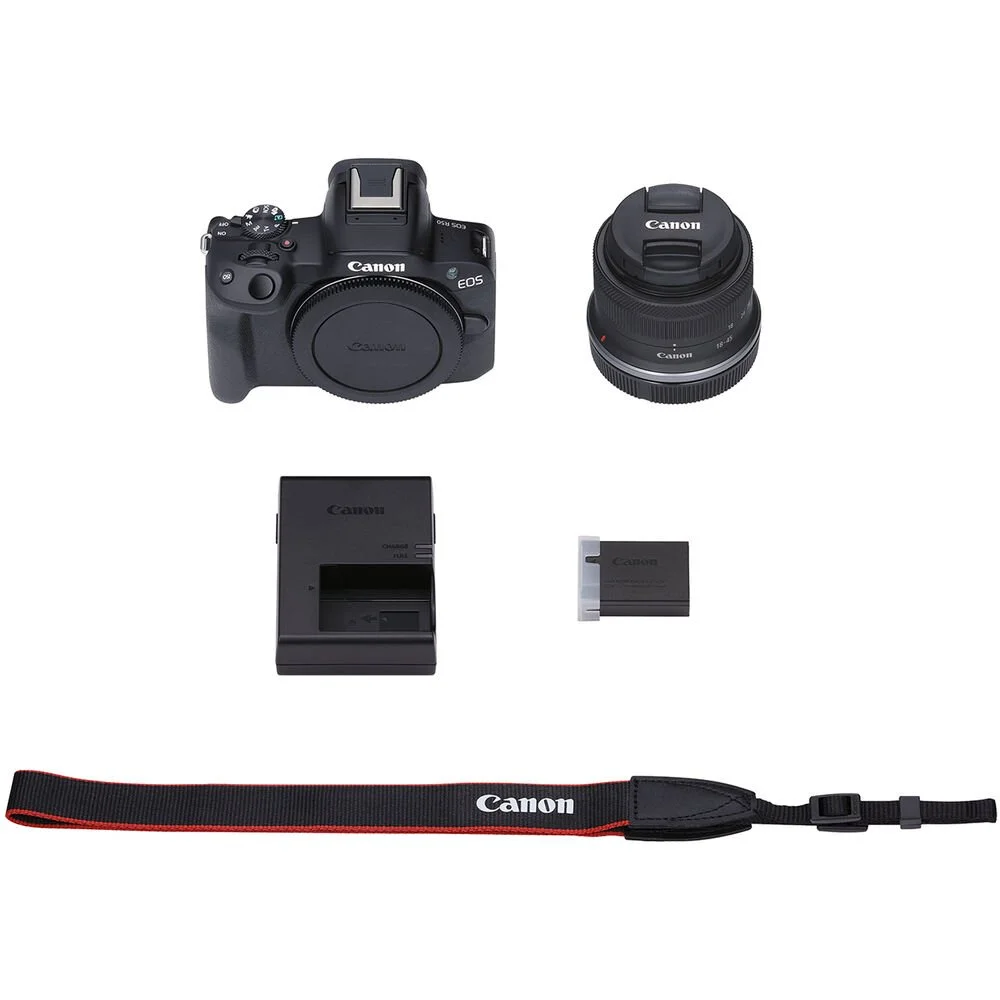
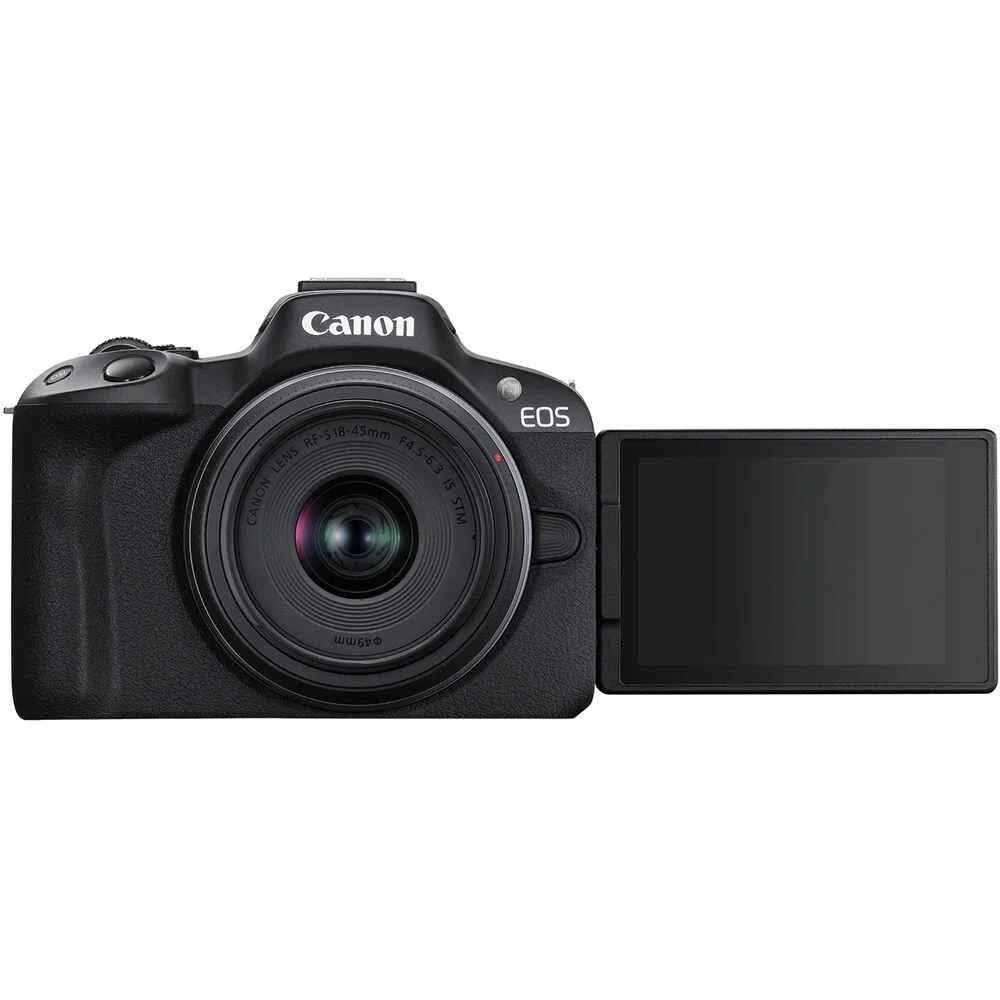
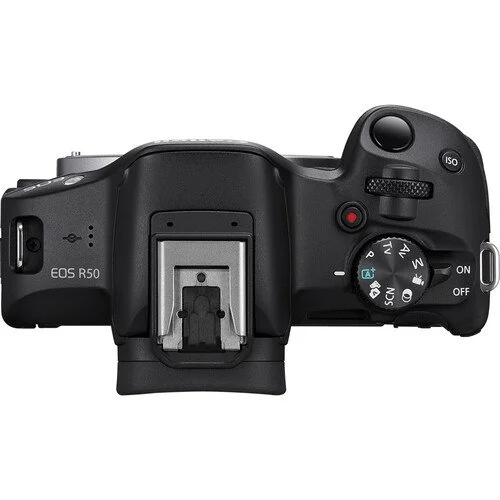
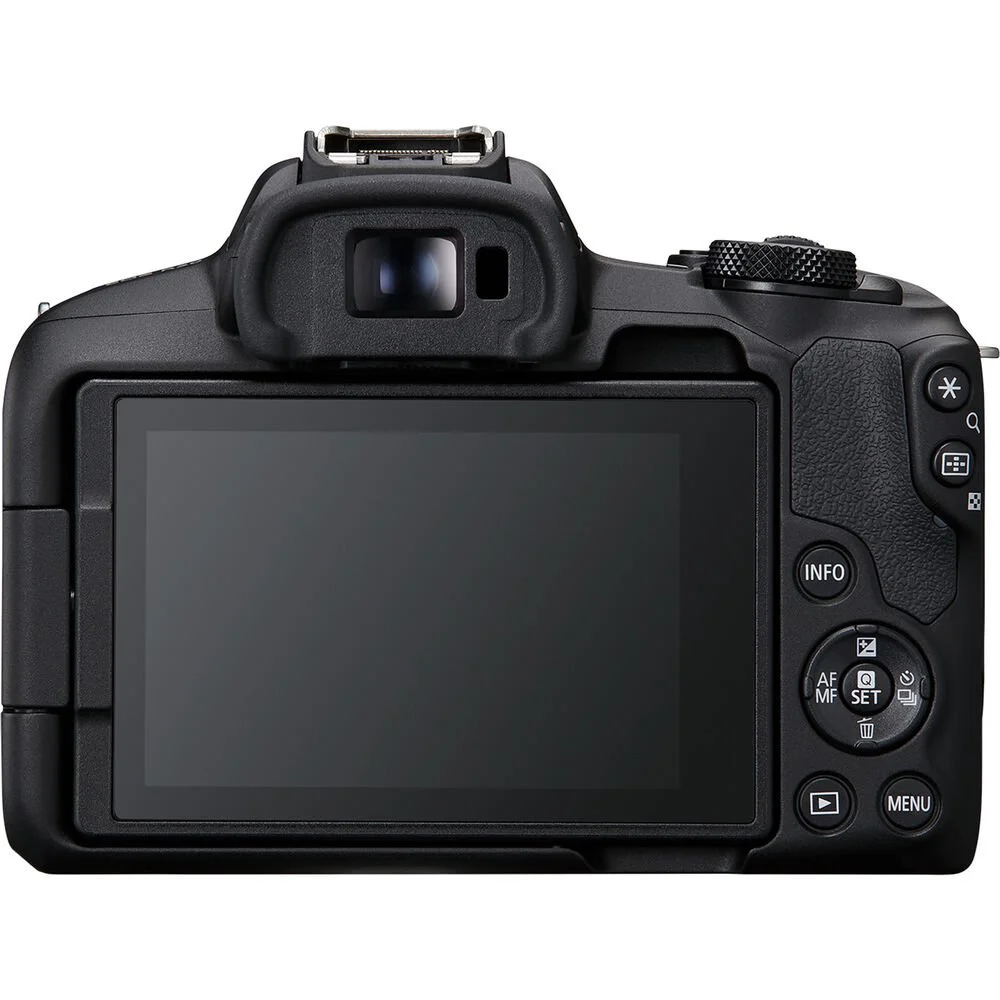
High Image Quality: Canon EOS R50 4K digital camera features a 24.2 Megapixel CMOS (APS-C) sensor and DIGIC X processor for stunning image clarity and level of detail
High-Speed Continuous Shooting: Capture fast action with up to 12 fps with Electronic First Curtain shutter and up tp 15 fps with Electronic Shutter for a superior vlogging camera
Advanced Auto Focus: Dual Pixel CMOS AF II covers up to 100% x 100% area with 651 AF zones; features auto subject detection and tracking of people, animals, and vehicles using deep learning technology — perfect 4K camera for video recording
Exceptional Low-Light Performance: Advanced A+ Assist offers an expanded array of auto-compatible scenes for greater expressive capability in auto mode and enables great imagery even in difficult settings such as night and backlit scenarios.
Fluid Video Capture: Video recording features such as 6K oversampled uncropped 4K movie at up to 30 fps, Full-HD High-frame rate movie recording at up to 120 fps: Movie for Close-up Demo Mode quickly and automatically switches focus to the subject closest to the camera
Superior Viewing Experience: 2.36-million-dot EVF with Clear View LCD II vari-angle touchscreen on this digital camera for easy composition and shooting from virtually any angle
Built-In Bluetooth and Wi-Fi Capability: Enable wireless functions, such as file viewing and transfer, by connecting the video camera to Wi-Fi; use the free Canon Camera Connect app to connect your camera to compatible smart devices via Bluetooth pairing
UVC Livestreaming
UVC/UAC compatibility allows the EOS R50 camera to be used as a web camera to stream live video in Full HD 30 fps fixed, without additional computer software, to applications such as Zoom, Microsoft Teams, Skype, and similar on-line web conferencing software(4).
Wired and Wireless Communications
The EOS R50 camera supports both wired and wireless connections to your smartphone via its USB Type-C(4) port, built-in Wi-Fi, and Bluetooth technology, making it easy to upload and share movies and photos to your favorite social networks.
Built-in Bluetooth Capability
Bluetooth pairing helps you connect the camera to compatible smart devices using the free Canon Camera Connect app. This low-energy wireless connection helps preserve battery life, while providing remote control of the camera. It also sends continuously updated GPS location data from your phone, letting you geotag what you've captured so you know precisely where you captured the photo.
Built-in Wi-Fi Capability
Enable wireless functions, such as remote live view, file viewing and transfer, by connecting to Wi-Fi quickly and seamlessly. Using the Canon Camera Connect app, you can also transfer files to your mobile device to browse and share on social media.
USB-C Connection
The EOS R50 camera can be connected to a computer or smartphone via USB-C(4). All Canon Camera Connect app features that can be used with Wi-Fi are now available when the camera and smartphone are connected via USB, using a compatible cable for your device.
(1) Effectiveness varies depending on the subject. In some cases, dogs, cats or birds may not be detected, while some animals other than dogs, cats or birds may be detected.
(2) Some vehicles may not be detected depending on condition in some cases. In addition, the camera may detect entity as vehicle other than cars, motorcycles, trains, and airplanes for tracking.
(3) Up to 15 minutes at 119.88/100.00 fps. Video may stop due to battery level, card capacity, or temperature.
(4) A compatible cable is required for wired USB communication (not included).
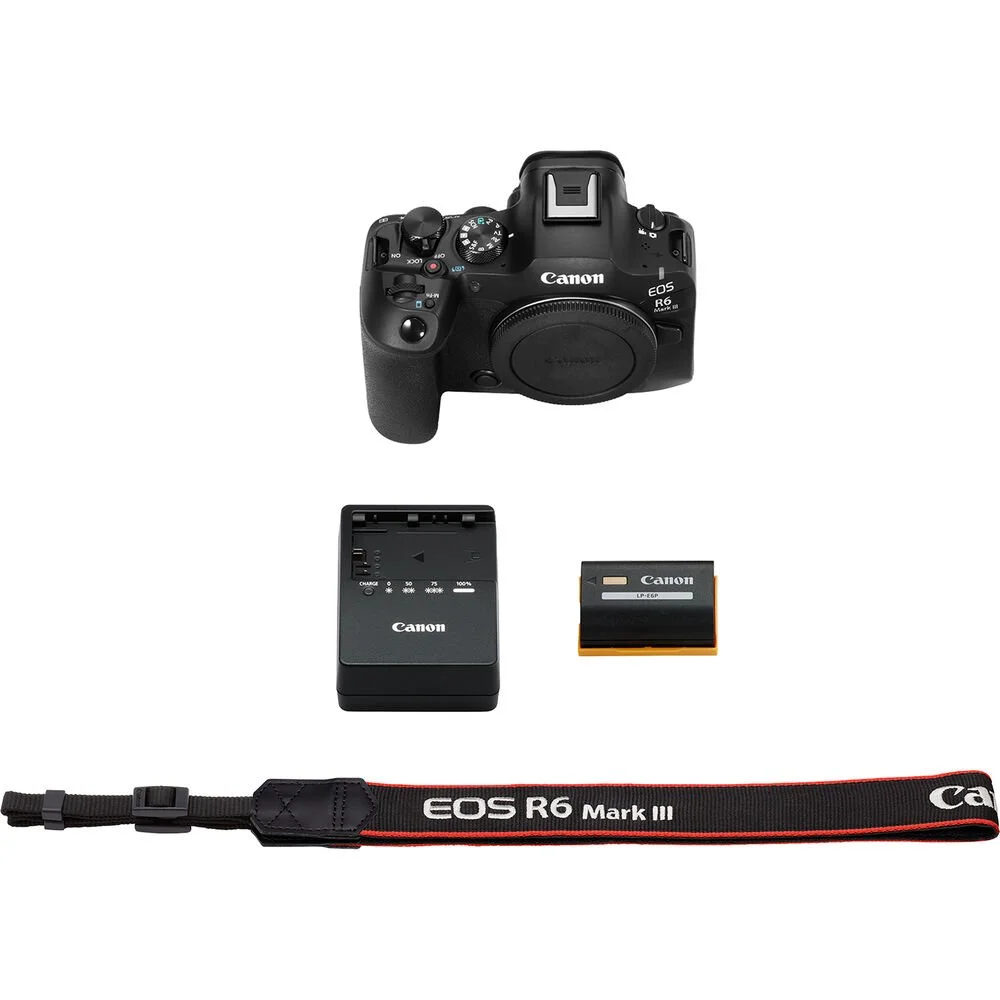
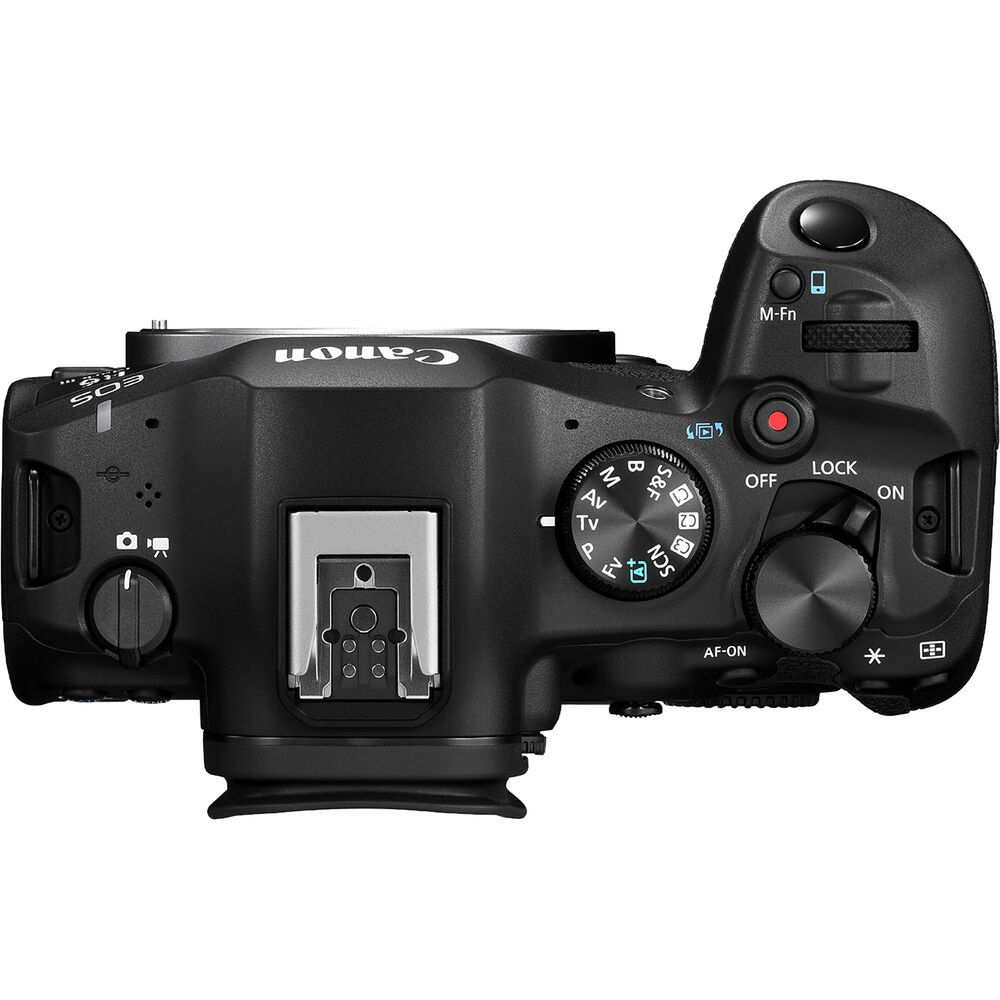
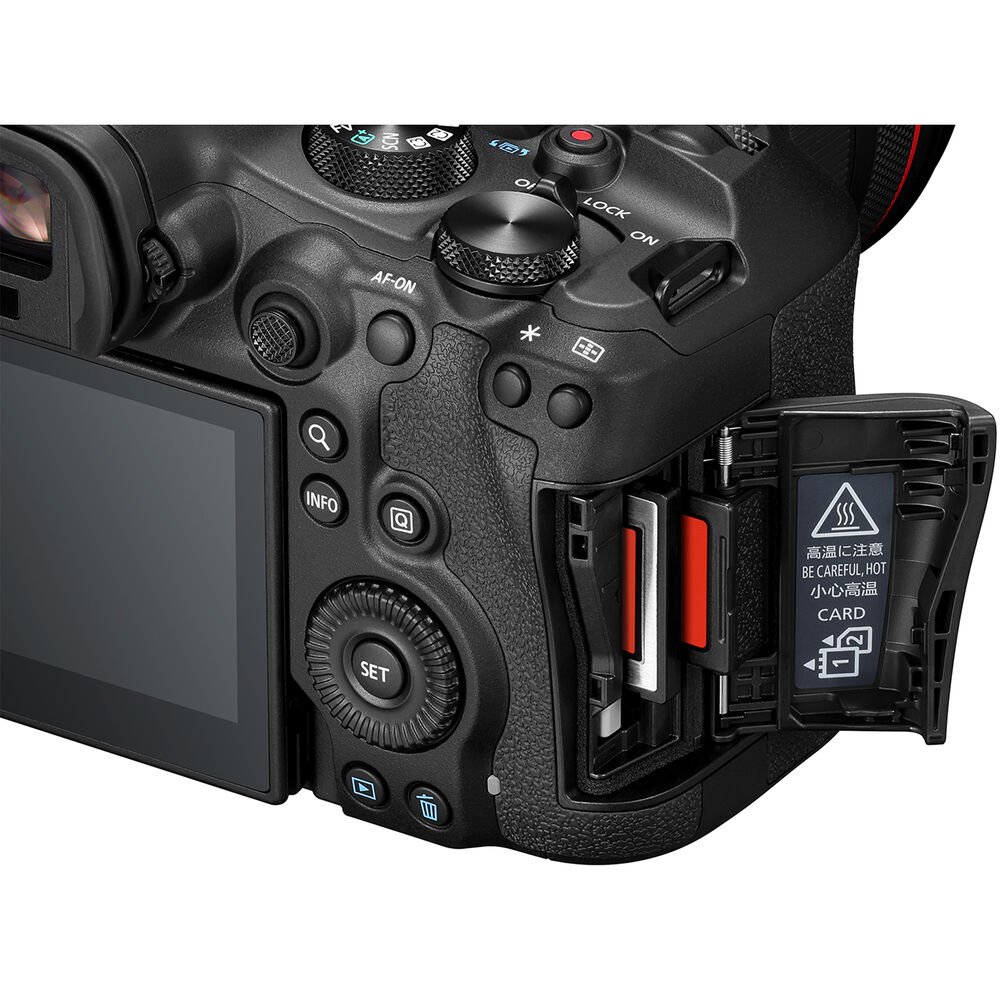
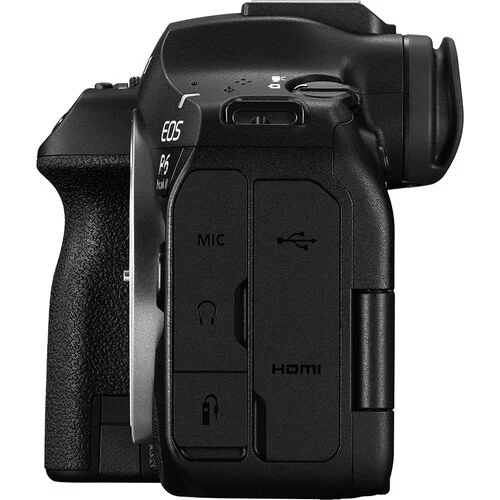
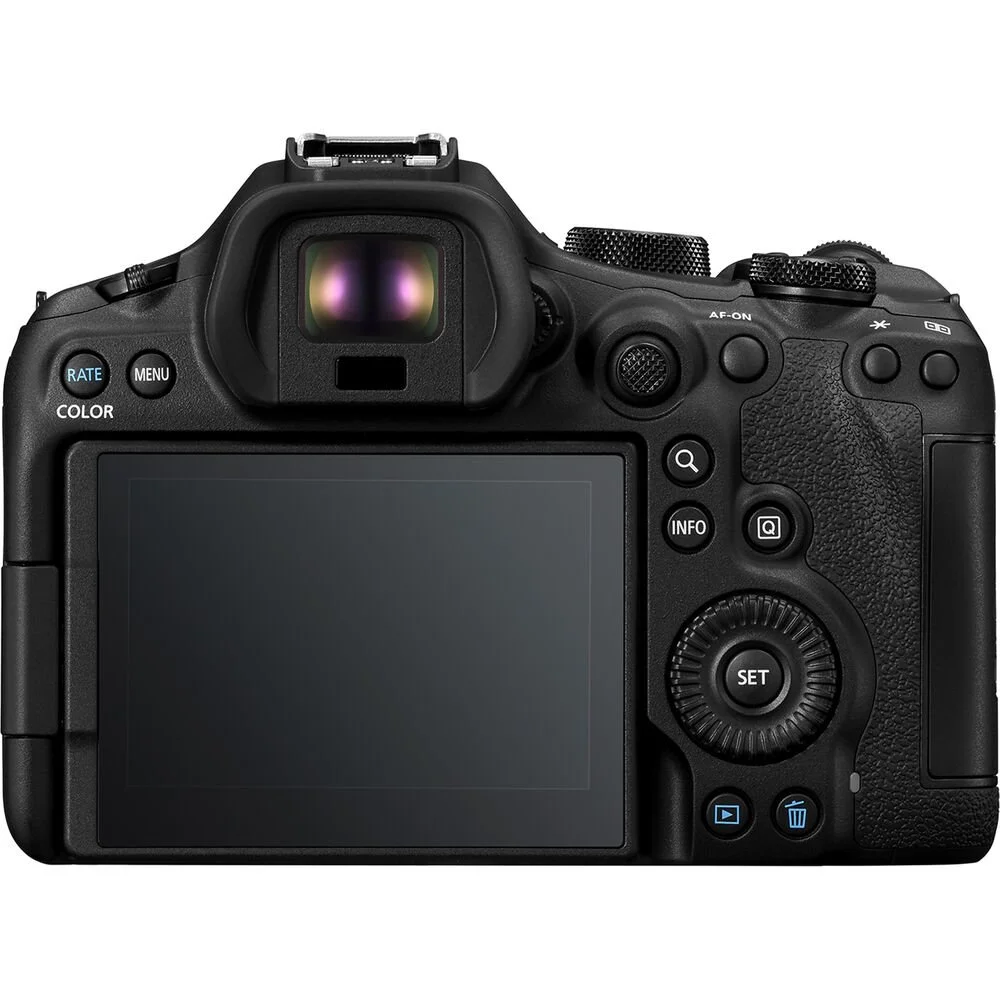
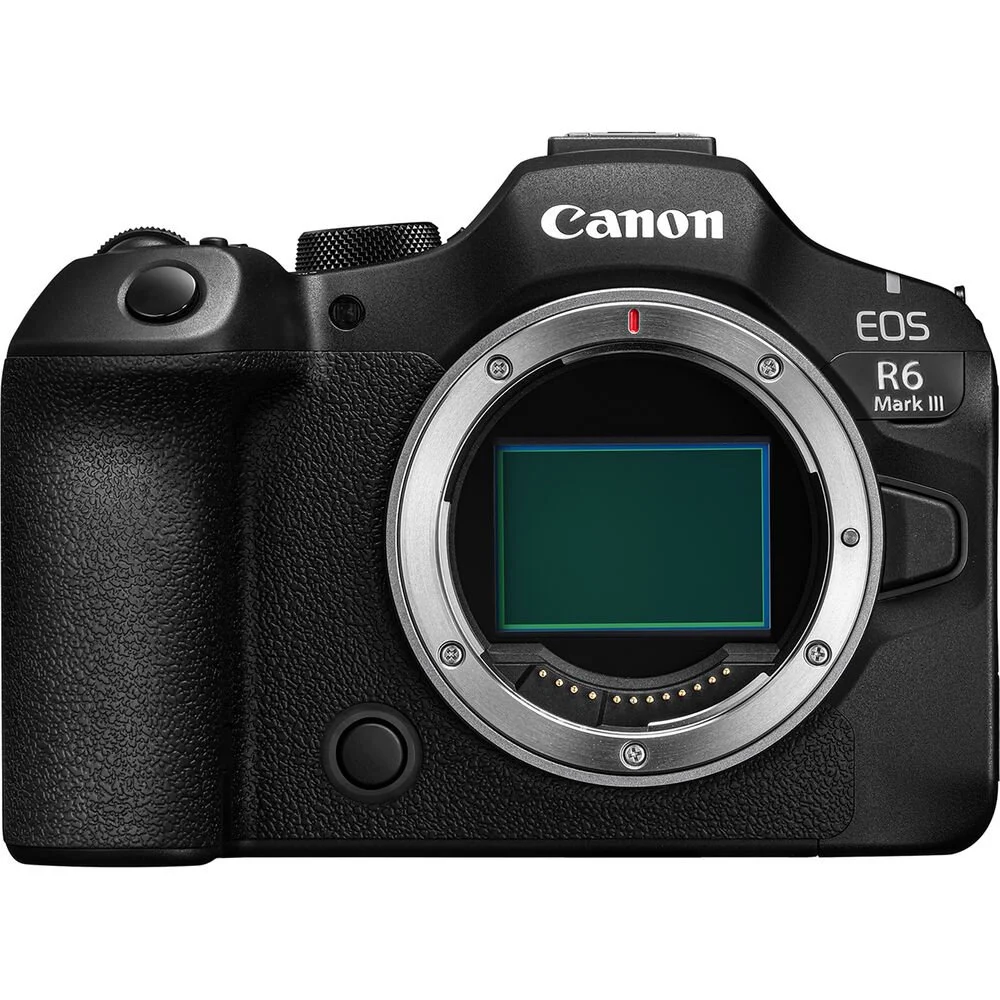
The Super Hybrid
Built to be the high-performance all-arounder for creatives who work in both photo and video, the Canon EOS R6 Mark III deftly combines an array of hybrid capabilities, upgraded imaging, and revised handling and design to suit shooters working in a wide variety of scenarios. A new 32.5MP sensor pairs with DIGIC X processing to offer 7K video recording, up to 40-fps photo shooting, improved Dual Pixel CMOS AF II with Register People Priority, more robust 8.5-stop image stabilization, and the R6 Mark III now also accepts both CFexpress Type B and SD memory cards for flexible file storage.
32.5MP Full-Frame Sensor and DIGIC X Processing
Offering a 34% increase in resolution over its predecessor, the R6 Mark III sports a 32.5MP full-frame CMOS sensor that offers greater sharpness, print resolution, and cropping ability. This sensor pairs with a DIGIC X processor to help deliver excellent image quality, low noise, and a broad sensitivity range. Additionally, the processing power manages the advanced Dual Pixel CMOS AF II system along with continuous shooting, video recording, and IBIS functions.
Borrowed from the R3, the R6 Mark III's upgraded processing suits the multimedia nature of the camera. Capable of processing high speed bursts as well as high-res 7K video, the DIGIC X supports up to 40 fps continuous shooting with a silent electronic shutter or 12 fps with a mechanical shutter, with AF and AE readings before each frame. There is also a Pre-Continuous Shooting setting that permits capturing an additional 20 frames prior to fully pressing the shutter button, to make sure you don't miss split-second movements.
SCN Shooting Modes
Intended for newcomers to photography, or those looking for a convenient alternative to post-production, a variety of SCN modes can affect how photos look directly in camera:
The R6 Mark III is the most advanced camera to feature SCN modes that adjust shooting settings using scene-specific auto exposure. The available modes include Portrait, Smooth Skin Portrait, Group Photo, Landscape, Panoramic Shot, Sports, Kids, Panning, Close-up, Food Night Portrait, Handheld Night Scene, HDR Backlight Control, and even Silent Shutter.
For video applications, Smooth Skin Movie, Close-Up Demos, Movie IS, and HDR settings can be used.
7K Video Recording
Beyond photography, the R6 Mark III is a highly capable video camera that suits creators working across mediums:
Using a similar sensor to the EOS C50 Cinema Camera, the R6 Mark III can internally record 7K video up to 60p in 12-bit Canon RAW Light Movie. If recording externally, to an optional external recorder, 7K footage up to 30p in ProRes RAW can be shot.
For especially sharp and clean footage, 4K FINE mode employs oversampling for improved image quality in DCI 4K and UHD 4K resolutions in the XF AVC S format.
Open Gate 3:2 recording is possible in 7K 30p in 10-bit MP4 or 12-bit RAW formats; Open Gate recording is especially useful for those producing social media videos as there is a greater recording area to crop from when resizing footage to vertical 9:16 format or to other unique aspect ratios, like 1:1, 4:3, or 4:5.
One of the biggest improvements over the R6 Mark II, the R6 Mark III has much-improved slow-motion/high-speed recording capabilities. It now supports both DCI 4K and UHD 4K recording at up to 119.8p for 5x slow motion playback in a 23.98p timeline. When you move down to DCI 2K and Full HD resolutions, 179.8p recording is possible. And, audio recording is supported for all resolutions and frame rate options except in S&F mode.
A new Slow and Fast Motion (S&F) mode can be accessed from the Mode dial with control over the resolution, frame rate, playback speed, and compression.
LUTs and Color Control
For more in-camera control over the look of footage, the R6 Mark III has a handful of color and style tools to affect the look of your imagery:
The Canon Log 2 profile can be used to improve dynamic range and gain 15+ stops of exposure latitude for more control while color grading.
LUTs can be used in-camera via the Apply Look function; you can register 17-grid or 33-grid .cube LUTs and register them as Custom Picture files to apply directly while recording. LUTs can also be transferred to the camera via the Canon Camera Connect app.
14 Color Filters are a convenient way to directly add color and tone adjustment directly to JPEG photos or MP4 videos.
A new Custom Picture menu provides direct access to Canon Log 2, Canon Log 3, HLG, PQ, Canon 709, BT.709, Color Filters, and other user adjustable parameters.
Additional Video Functions
Pressing the Magnify button while recording lets you enlarge the image to check focus without interrupting the clip.
Pre-Recording starts recording a clip up to 5-second prior to pressing the record button to help ensure you don't miss an unpredictable moment.
Auto Level works in conjunction with the In-Body Image Stabilizer to adjust the sensor so it's level to the scene's horizon.
Focus breathing correction can be used with compatible lenses to mitigate the effects of optical focus breathing.
No results match your search. Try removing a few filters.
